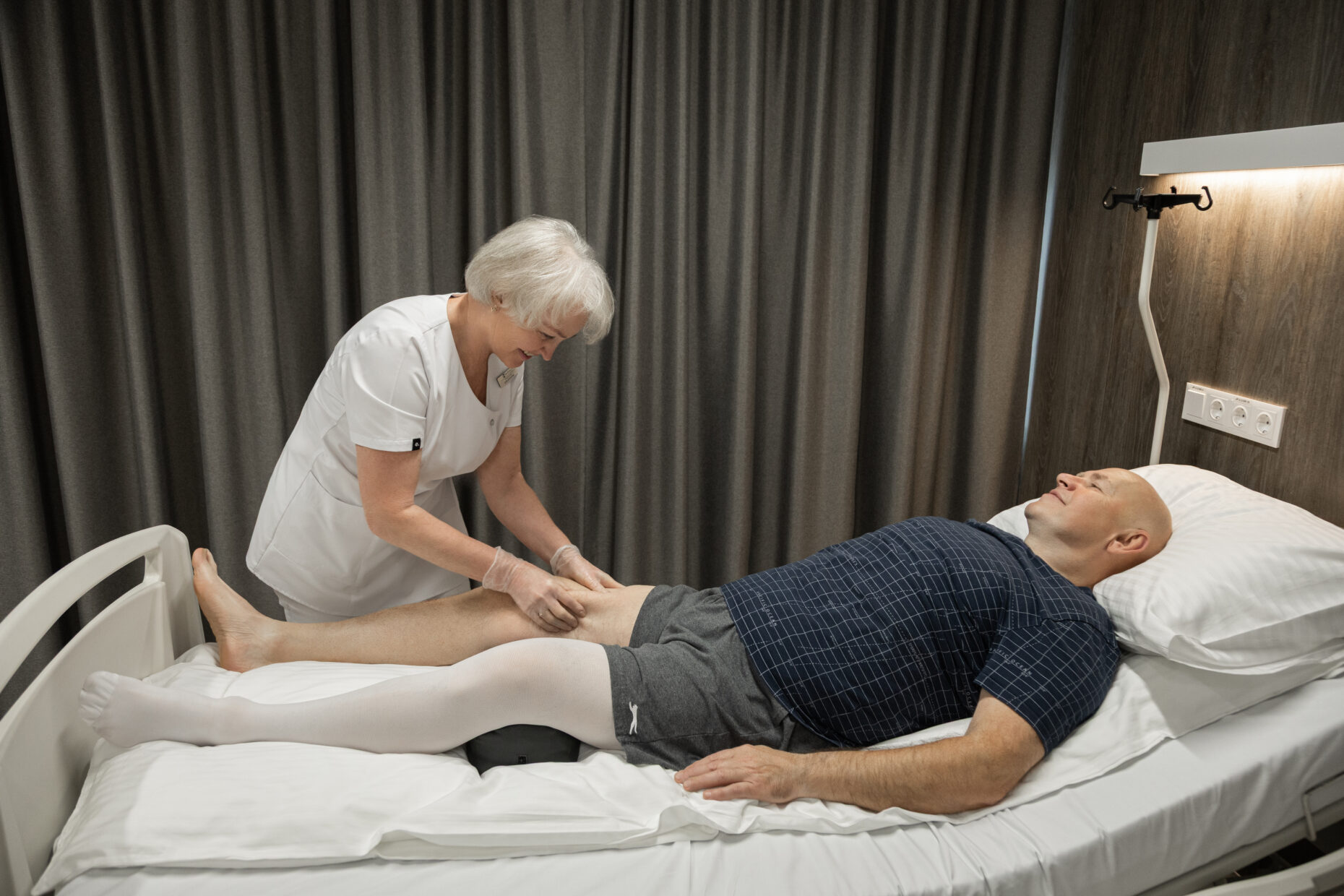
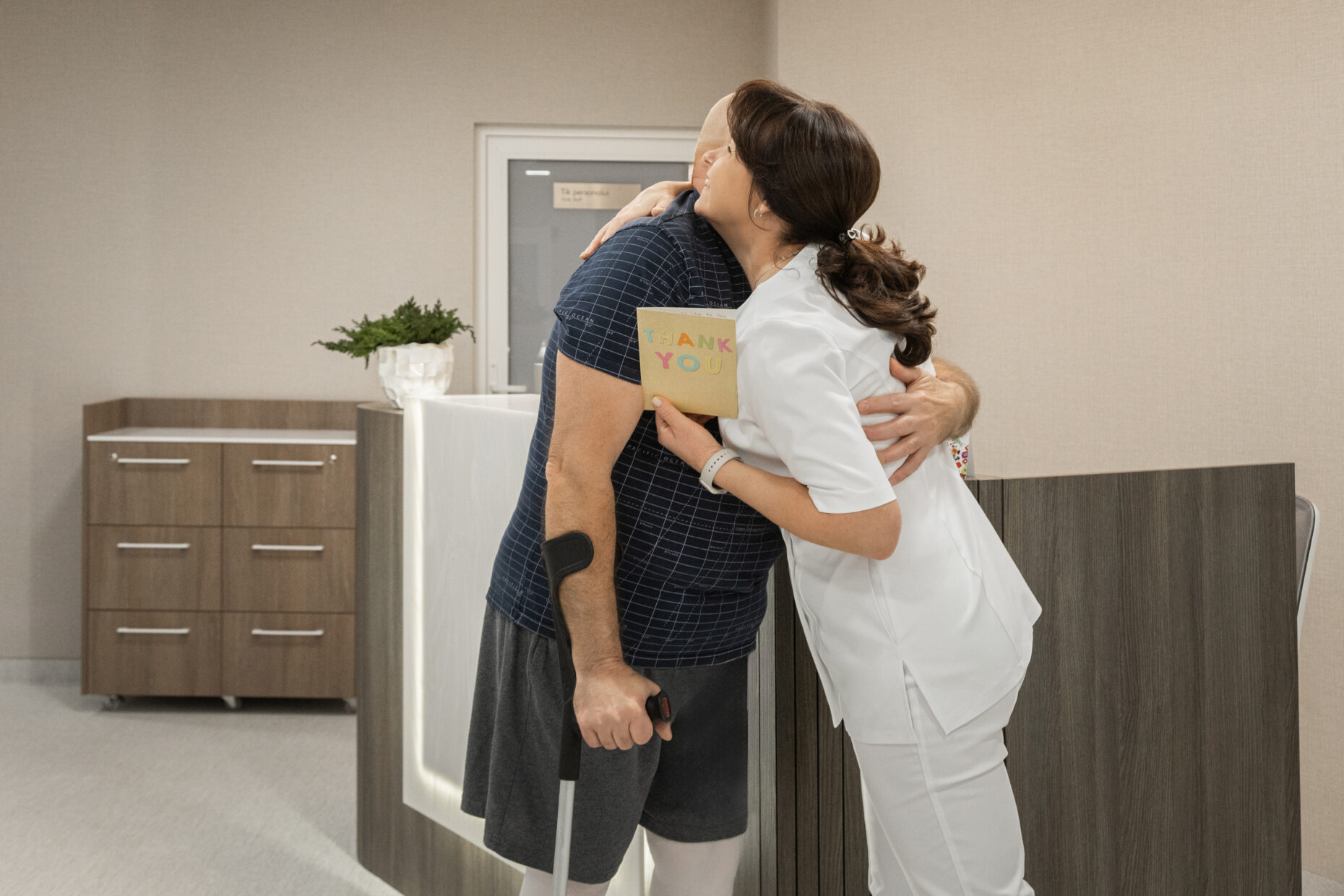
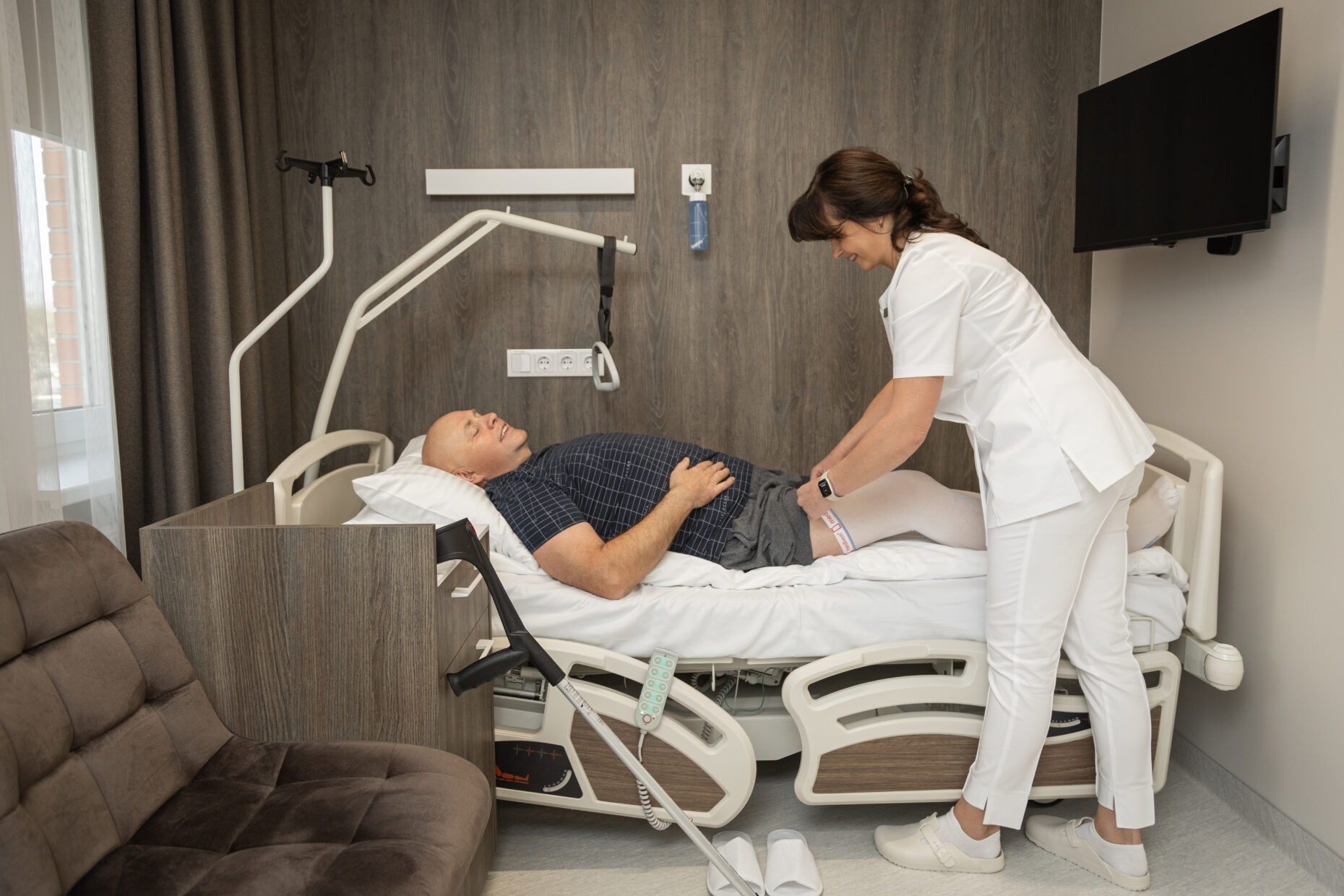
Your rehabilitation starts on the same floor as your surgery. You stay with us at Gijos Klinikos in Kaunas, where our 1,600 m² inpatient rehabilitation centre offers one-to-one physiotherapy and round-the-clock care.
Inpatient rehabilitation after orthopaedic surgery cost & info
Inpatient rehabilitation after orthopaedic surgery cost & info
At Gijos Klinikos, we’re proud of the rehabilitation programme we’ve built around the needs of patients travelling from abroad. Over the years, many of Lithuania’s best-known Olympians have come to us for treatment. The same expertise shapes your rehabilitation after surgery. Our links with Lithuanian sport run deep, and our partners include Lietuvos krepšinis, LTU Aquatics, the Lithuanian Wrestling Federation and the Lithuanian Deaf Sports Committee, to name just a few.
Your rehabilitation begins in your room on the day of your operation. Once the anaesthetic has worn off, feeling has returned to your legs and your team confirms you’re ready, your physiotherapist helps you stand. With a walker for support and your physiotherapist by your side, you take your first steps.
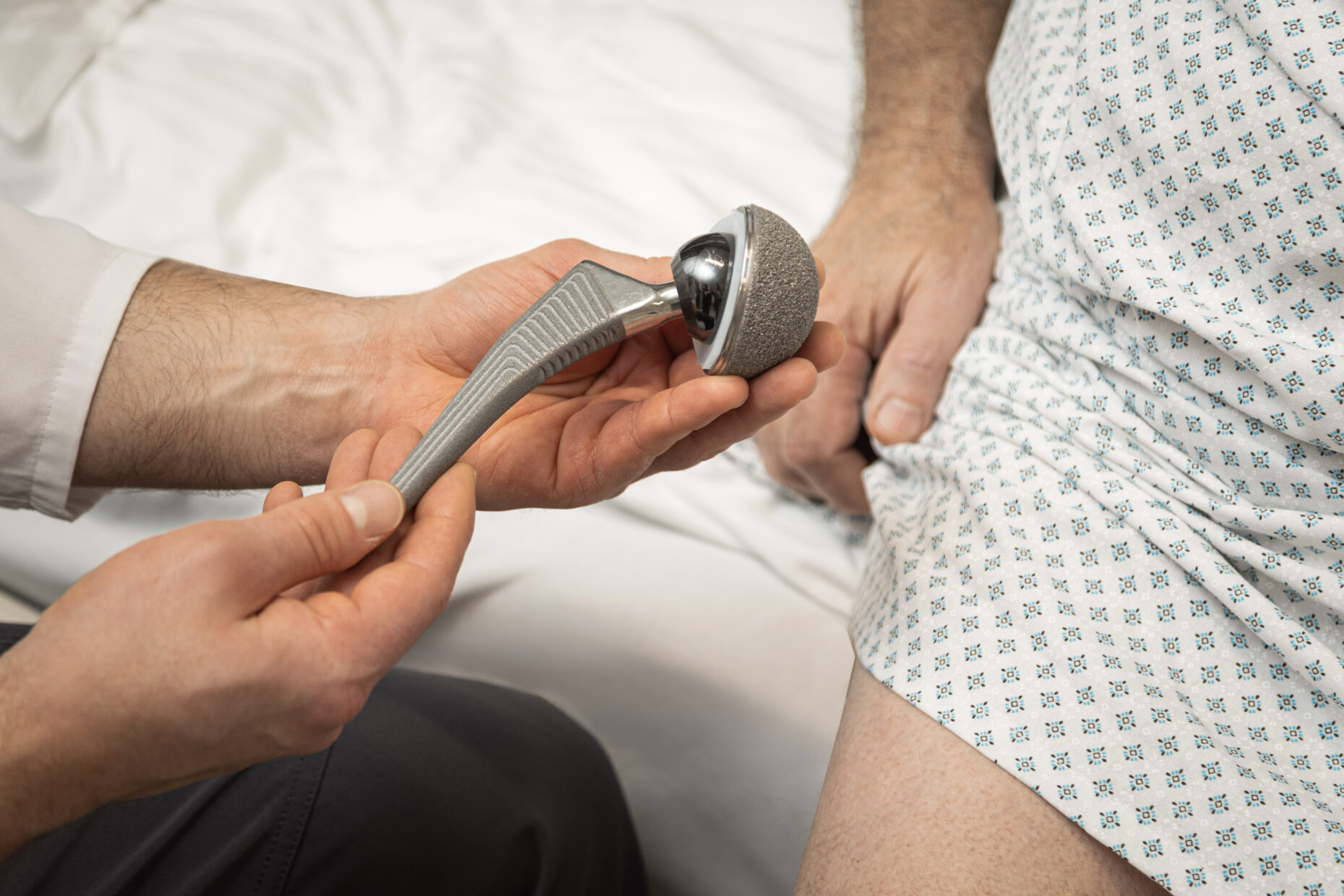
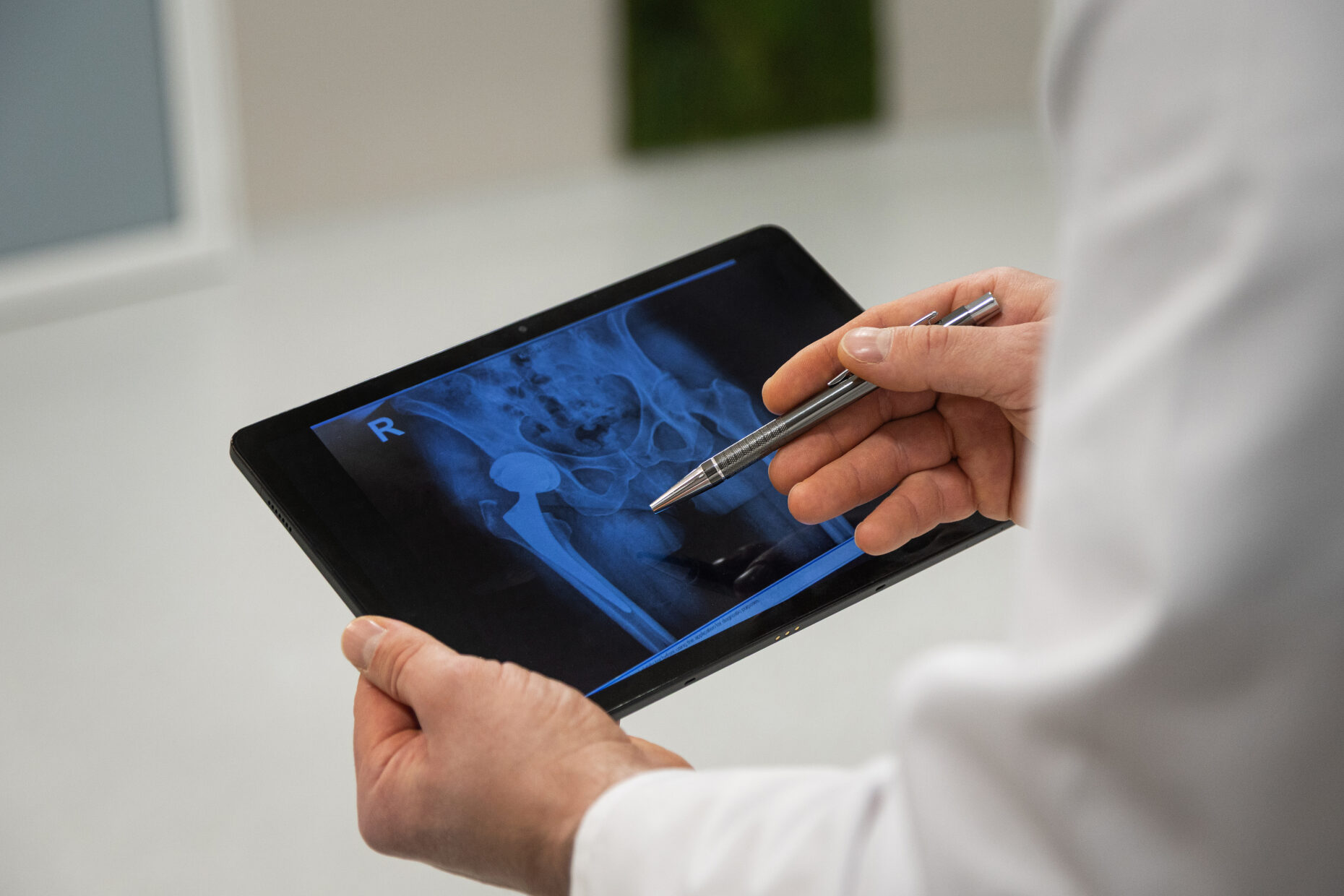
You may stay in our specialist inpatient rehabilitation wing from the start of your stay. If you begin your stay on the surgical ward, you’ll move to the rehabilitation wing on the same floor after your operation. In our 1,600 m² rehabilitation centre, our medical team is on hand day and night. During individualised sessions, your physiotherapist helps you practise the movements you’ll rely on at home, from getting out of bed and rising from a chair to walking confidently from room to room.
Take a look around:
A typical day in rehab after hip/knee replacement surgery
Morning
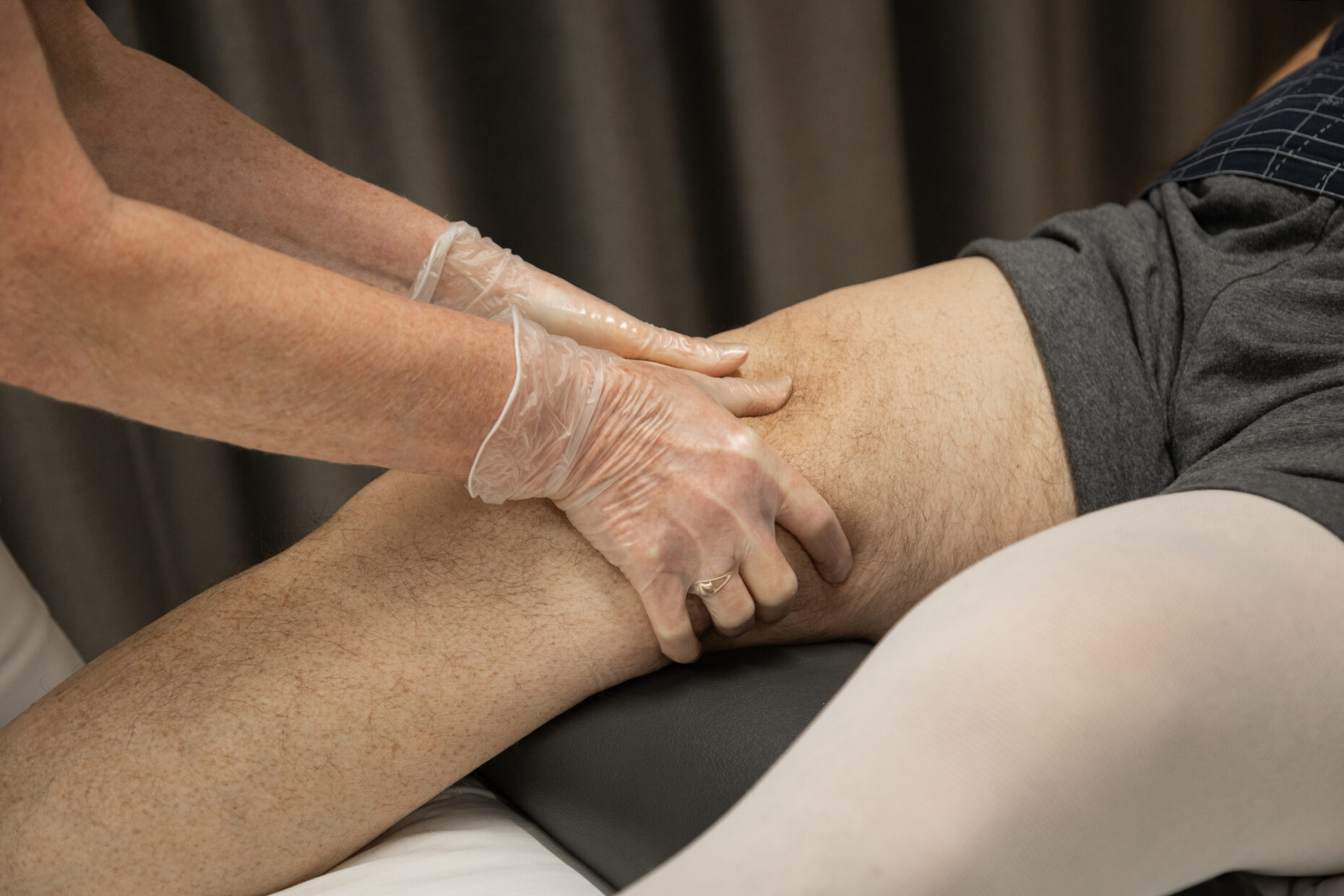
7:00 am Lymphatic drainage and TENS. Each morning begins with both treatments to help you get ready for your first physiotherapy session in our gym and the rest of your rehabilitation day. Inflatable sleeves gently squeeze and release your legs to encourage blood flow and help reduce swelling. During TENS, small pads on your skin deliver mild electrical pulses to help ease pain.
7:30 am Your nurse checks how you’re feeling and brings your morning medication.
7:45 am Your rehabilitation doctor stops by to see how you’re feeling and answer any questions. If you’re in pain or something is troubling you, you can talk it through together. Your doctor can adjust your treatment if needed, including your pain medication.
08:00 am Breakfast. Over breakfast, you choose your meals for the whole of the following day.
09:00 am Physiotherapy. You’ll work a little harder in your first gym session than in your second. Your physiotherapist will guide you through exercises to help you move your joint more freely and build strength in your legs. Depending on how you’re feeling and what you’re ready for, you might use resistance bands, a gym ball or a foam roller etc.
10:00 am A one-to-one massage with your therapist.
11:00 am Cold compression therapy. The first of your three daily cooling treatments combines cold with gentle pressure to help ease pain and reduce swelling after your morning physiotherapy session.
Afternoon
1:00 pm Lunch and time to yourself. Rest in your room or head to the lounge for a cup of tea or coffee.
3:00 pm Physiotherapy. Your second session is gentler and focuses on helping you feel steadier on your feet. Your physiotherapist guides you through balance exercises and helps you find a more natural walking rhythm. Depending on your progress, you may practise on a balance board or cushion. If using crutches has left your back feeling tight or sore, your physiotherapist will also show you gentle exercises to ease the tension. If you’ve had a knee replacement, you’ll finish the session with a CPM (Continuous Passive Motion) machine, which gently bends and straightens your knee to help improve your range of motion. The controlled movement may also help ease stiffness and swelling. Our goal is for you to achieve at least 90 degrees of knee flexion before you head home, depending on your individual recovery.
4:00 pm Your second cooling treatment, followed by time to rest before dinner.
Evening
6:00 pm Dinner. Your nurse brings pain relief if prescribed.
6:30 pm Your final cooling treatment of the day.
9:00 pm Your nurse brings your evening medication before you settle in for the night.
Please note: Physiotherapy continues over the weekend, with one longer, physiotherapist-led session per day. Cold and compression therapy, TENS and CPM treatments also continue as part of your rehabilitation programme. Your rehabilitation also includes follow-up visits from your orthopaedic surgeon to monitor your recovery and check on your progress after surgery. Every room has a nurse call button, so you can ask for assistance at any time, day or night.
Between sessions
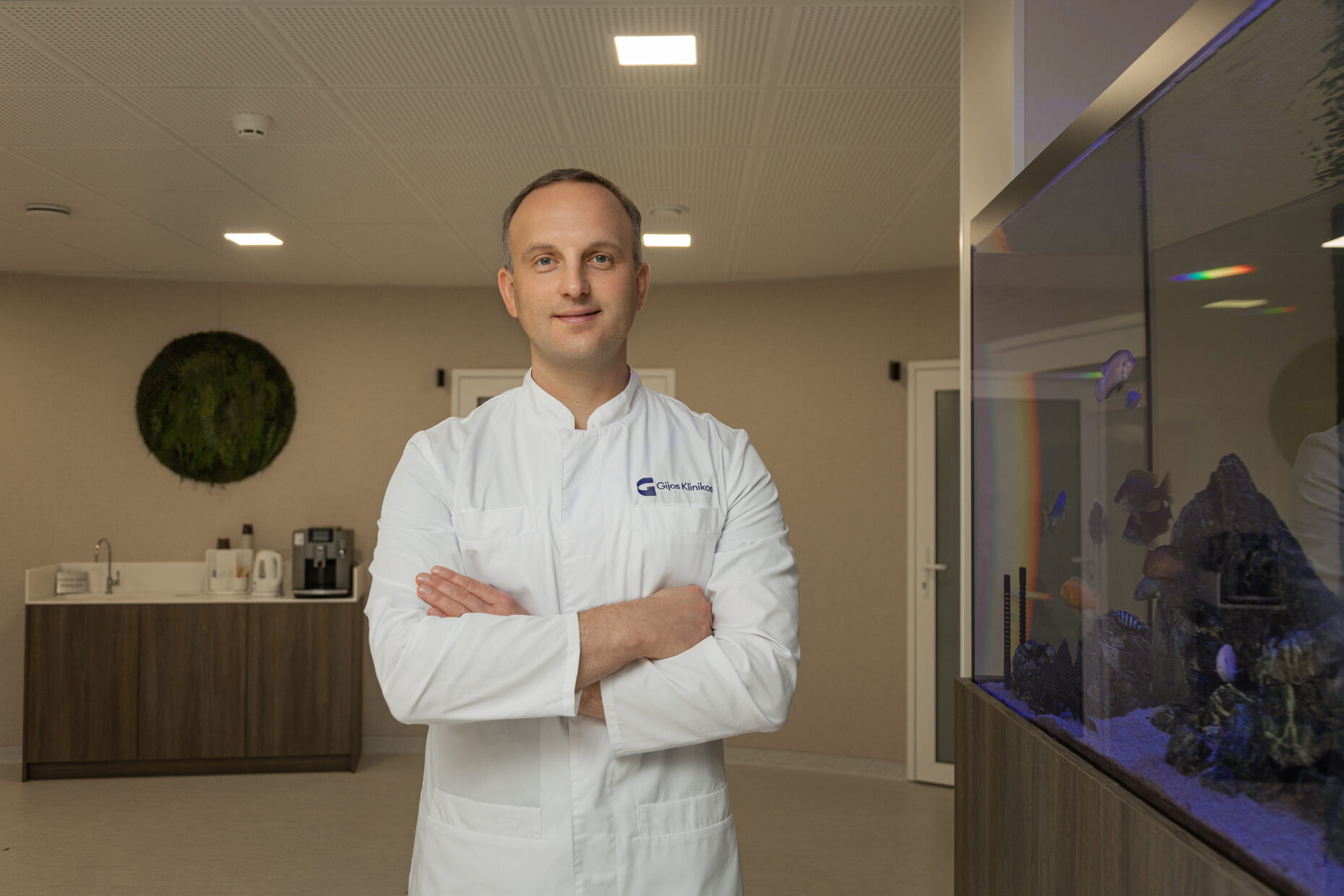
There’s always tea and coffee available in the lounge. Between treatments, you can take a moment to unwind, watch the fish in the aquarium, read a book, play a board game or have a good chat with other patients. It’s a lovely place to get to know each other.
Your room
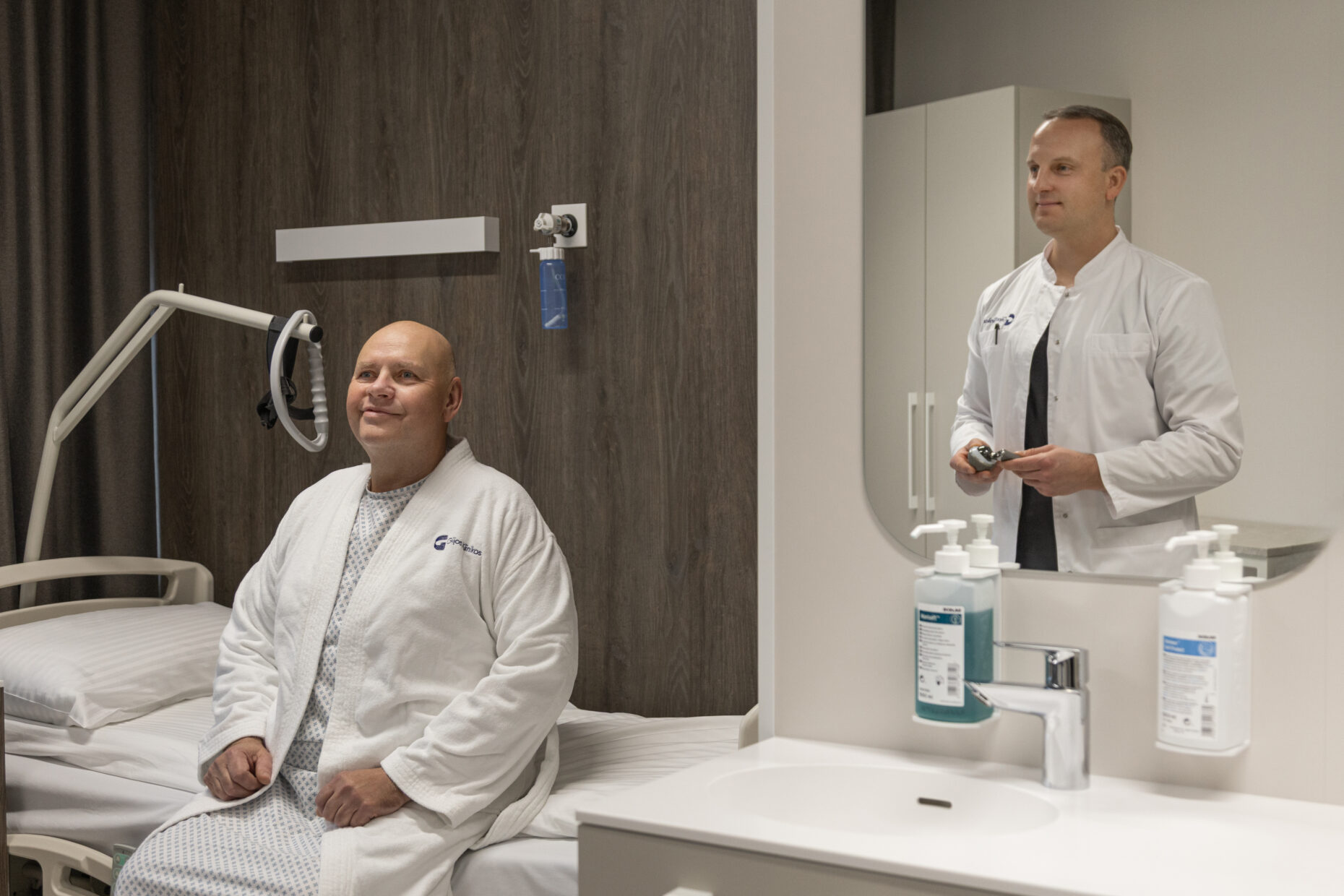
You’ll have a spacious room to yourself, with an en-suite bathroom adapted for recovery after surgery. A shower chair lets you sit while you wash, and a raised toilet seat makes it easier to sit down and stand up.
Take a look around:
How long will I spend in rehabilitation after surgery?
If you’re coming to us for a single knee or hip replacement, we recommend staying for at least 7 days, with your flight home on day 7. This gives you time to recover from surgery, get started with rehabilitation, and feel more confident on your feet before heading home.
If you’re having both knees replaced at the same time, we recommend spending 10 days at the clinic after surgery. This gives you extra time to rehabilitate, build strength, and feel confident before travelling home.
It's more than just a surgery with rehabilitation
Flights & accommodation
Don't worry, our travel manager will offer you a few best alternatives for air travel & accommodation. Also, all the prices include overnight stay and care at the clinic
Personal travel manager & 24/7 assistance
Many clinics these days have lost the personal touch with their patients. However, with us you will always have someone to talk to, rely upon and take care of you (if you need anything).
Pick-up/drop-off & transportation
You will be picked up (and dropped off) in the airport by your travel manager. All the transportation between the clinic and hotel is also included.
Extra phone + local call credit
We are just a phone call away if needed. Thus, we provide our patients with extra phones with local SIM cards and unlimited call credit.
Help with after-care
At all times you will have direct contact with the surgeon and your travel manager. Who will answer your questions & provide recommendations.
Insurance & Safety
Our patients are covered by a reliable insurance covering surgical malpractice. Yet, first & foremost, we ensure maximum safety.
Meet the team
swipe to see
Physiotherapist
Vainius Petrauskas
Lead Physiotherapist at Gijos Klinikos, specialising in rehabilitation after hip and knee replacement surgery. Helps patients regain mobility, build strength and prepare for everyday life at home. Part of the clinic’s team since 2015.
Vilius Baikštis helps patients regain strength and mobility after an injury or orthopaedic surgery, including hip and knee replacements. He also treats joint, neck and back pain and works with patients to improve posture and address muscle imbalances.
Deividas Jankūnas is a physiotherapist at Gijos Klinikos. He works with patients recovering from injuries or orthopaedic surgery, helping them regain mobility. He also helps patients manage joint pain that affects everyday movement.
Rehabilitation FAQs with Physiotherapist Vainius Petrauskas
What will I be able to do by the end of my rehabilitation?
Our goal is to help you return home feeling confident with everyday activities. By the end of your stay, we aim for you to be able to:
Walk safely with crutches, including longer distances.
Go up and down stairs independently using the correct technique.
Sit down, stand up and get in and out of bed safely.
Walk with better posture, balance and a more natural walking pattern.
Have improved muscle strength and joint mobility.
We’ll also work on relieving muscle tension, improving flexibility and addressing any muscle imbalances that may affect the way you walk.
Before you leave, your physiotherapist will show you exercises to continue at home, so you know exactly how to keep making progress after your stay.
What does the rehabilitation process look like day by day?
What does the rehabilitation process look like day by day?
Day of surgery
Once the anaesthesia has worn off and you have regained feeling in your legs, your physiotherapist will help you get out of bed and take your first steps. The goal for the evening is simple: to stand up safely and walk to the bathroom with assistance.
Day 1 after surgery
You’ll start walking in your room and later around the clinic with your physiotherapist, using a walking frame for support. The focus is on building confidence, improving your stability and getting used to moving with your new joint.
Days 2–3
By the second or third day, most patients have learnt to use crutches and can make their own way to the rehabilitation gym. Your physiotherapy sessions will gradually become more active as your strength and mobility improve.
The following days
As you progress, your physiotherapist will help you practise everyday activities you’ll need when you return home. Depending on your individual abilities and recovery, these may include getting down onto the floor and back up, climbing stairs, getting in and out of a car, and moving safely in different situations.
We’ll also talk you through practical aspects of life after joint replacement, including when and how to safely resume sexual activity.
The pace of rehabilitation is always adapted to your recovery, so you can build confidence and independence one day at a time.
How does rehabilitation differ if I have both knees replaced at the same time?
Having both knees replaced at the same time is more common than you might think. Some patients choose this option because it means just one anaesthetic, one recovery period and a more cost-effective treatment overall. However, it is not suitable for everyone. Your surgeon will assess your suitability, taking into account your overall health, medical history and a range of other clinical factors. Recovery can be particularly painful and physically demanding, especially in the early stages, so it is important to understand what to expect before making your decision.
The rehabilitation programme is largely the same as for a single knee replacement, but we take things a little more slowly to give your body extra time to recover.
For this reason, we recommend staying at the clinic for at least 10 days after surgery. This gives you more time to regain strength, improve your mobility and feel confident on your feet before travelling home.
Will I have individual physiotherapy sessions every time?
During the week, we have a larger team of physiotherapists on duty, so each physiotherapist typically works with just one or two patients at a time in the rehabilitation gym.
At weekends, sessions are held in small groups of up to three patients per physiotherapist.
But don’t worry – even when you’re sharing a session, your rehabilitation is always tailored to you. Your physiotherapist will guide you through exercises suited to your needs and progress, making sure you receive the attention and support you need every step of the way.
Will physiotherapy be too physically demanding if I'm older and haven't exercised in years?
Physiotherapy is certainly quite intensive, as there’s a lot we want to help you achieve during your stay. Since most of our international patients are only with us for a relatively short time, we make the most of every session to help you regain strength, mobility and independence before heading home.
That said, you don’t need to be fit or used to exercising to manage rehabilitation. Your programme is tailored to your age, physical abilities and progress, and your physiotherapist will make sure you’re working at a pace that’s both safe and effective.
One thing that can make a real difference is starting to exercise well before your surgery. Even gentle, regular exercises to strengthen your muscles and improve your mobility can help you feel better prepared for rehabilitation and make those first few days of recovery a little easier.
We’ve helped patients of all ages and body types through their recovery. Our youngest joint replacement patient was just over 30, while our oldest was over 90 – and successfully completed both surgery and physiotherapy.
So yes, rehabilitation takes effort, but you certainly don’t need to be an athlete to get through it!
What exercises should I do before joint replacement surgery?
I’ve actually put together a few videos specifically to help you prepare for your surgery. You can follow along at home and start building your strength and mobility before your operation:
What exercises should I do at home after returning from the clinic?
Before you head home, we’ll give you a take-home pack with all your medical documents, the medication you’ll need and an illustrated exercise booklet I’ve personally put together to help you continue your rehabilitation at home.
The booklet includes clear instructions and illustrations, so you’ll know which exercises to do and how to keep building your strength and mobility.
You’ll also find plenty of helpful exercise videos and similar content on our YouTube channel:
individual treatment outcomes may vary depending on patient-specific factors and compliance with the prescribed rehabilitation programme.
prices given below are exact (without hidden costs). Many other clinics increase their initial prices.
we respect your privacy & ensure that your information is used/kept securely.
 PLASTIC SURGERY
 ORTHOPAEDIC SURGERY
 BARIATRIC SURGERY
 ABDOMINAL SURGERY
 UROLOGY SURGERY