PLASTIC SURGERY
 ORTHOPAEDIC SURGERY
 BARIATRIC SURGERY
 ABDOMINAL SURGERY
 UROLOGY SURGERY
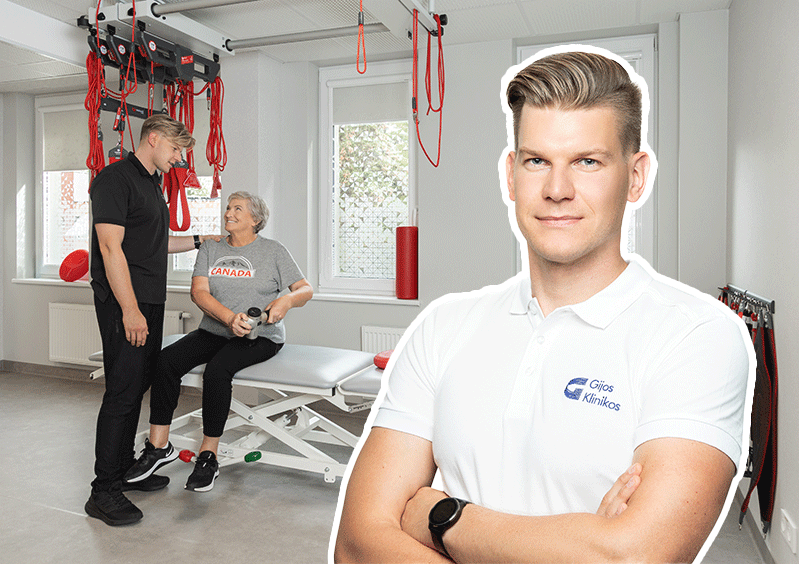
Inpatient rehabilitation after knee or hip replacement at Gijos Klinikos: your questions answered
If you’re travelling to Lithuania for knee or hip replacement, you’ll want to know what happens between your operation and your flight home. Where will you recover? Who will help you get moving? And will you be ready to manage at home when it’s time to leave?
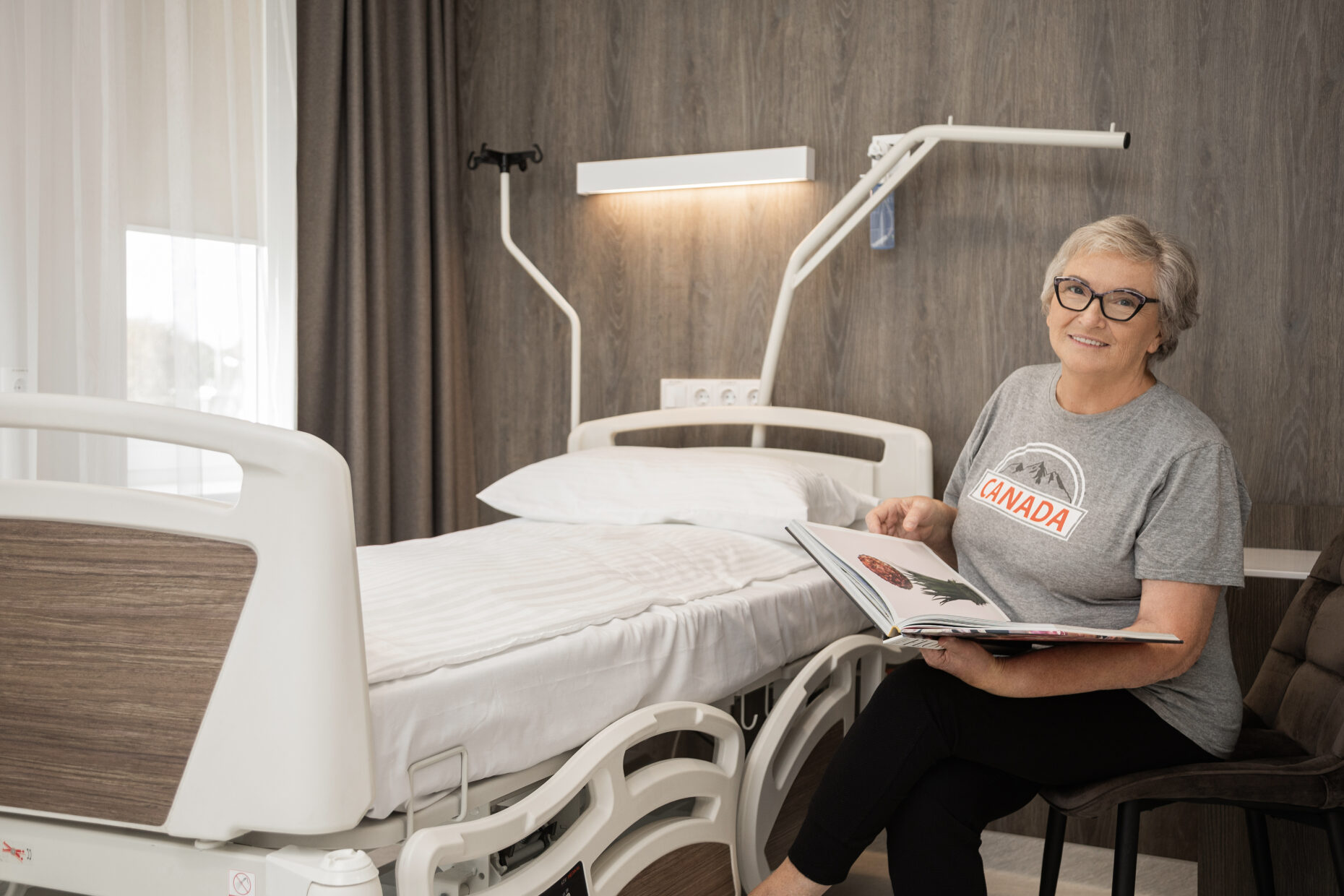
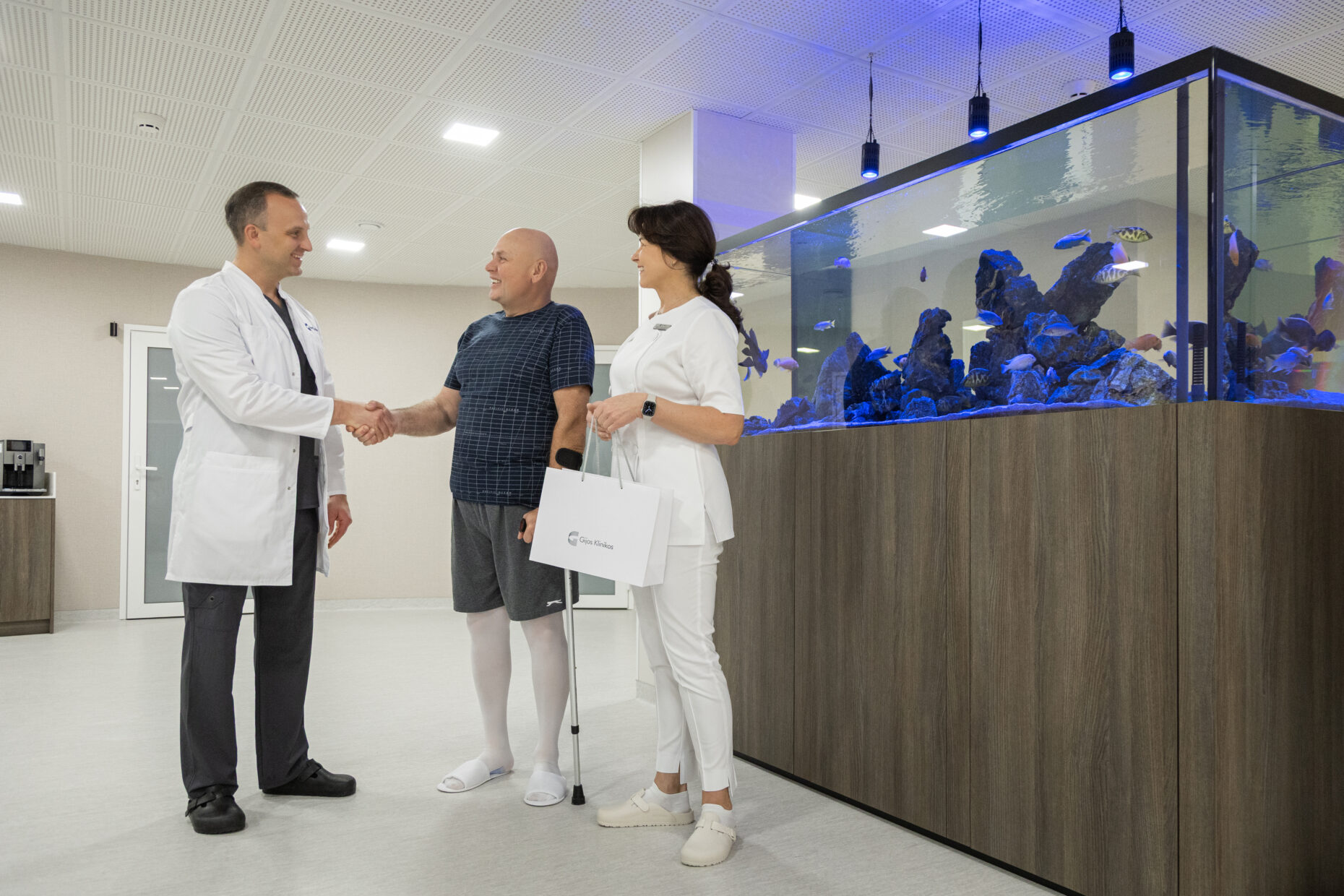
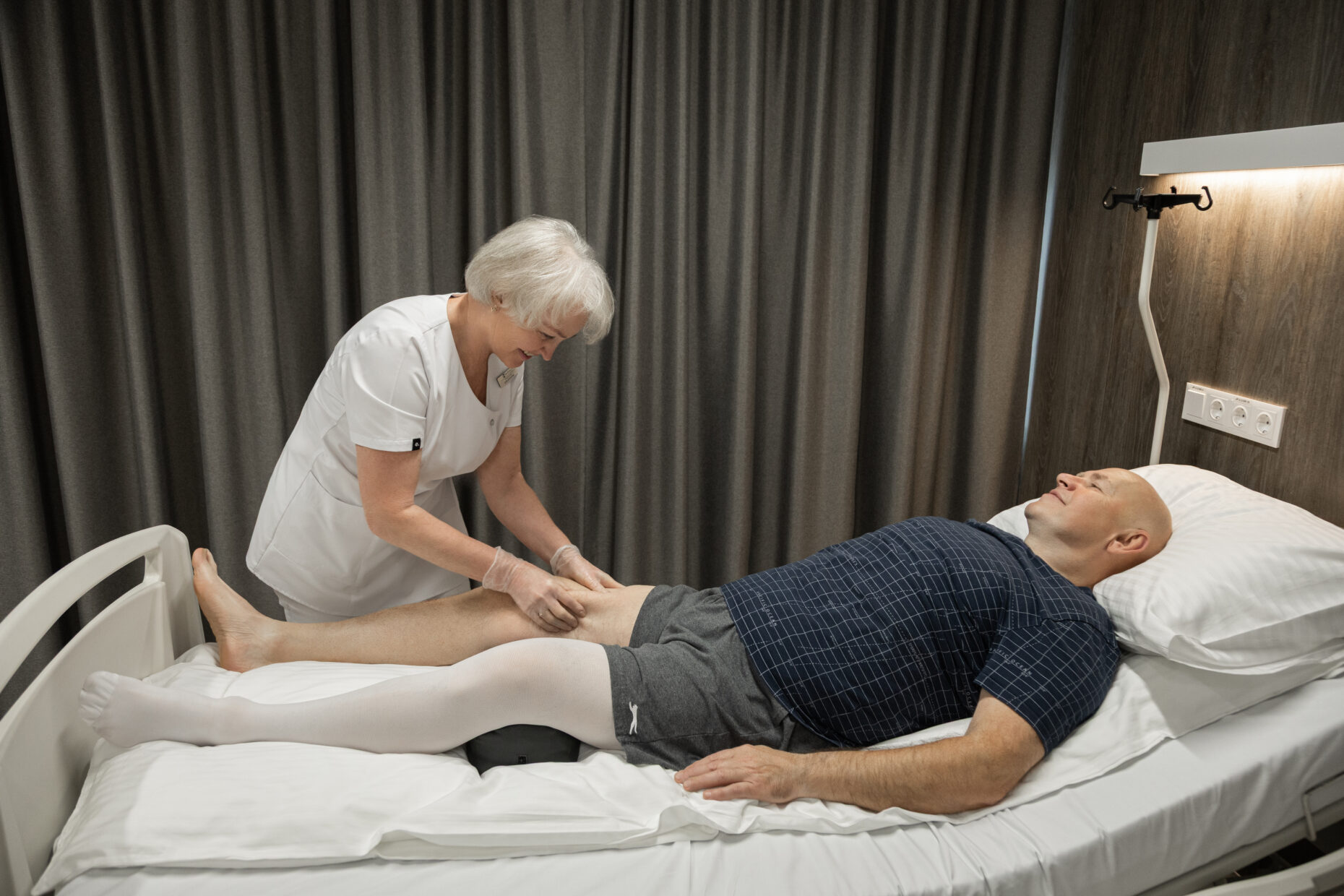
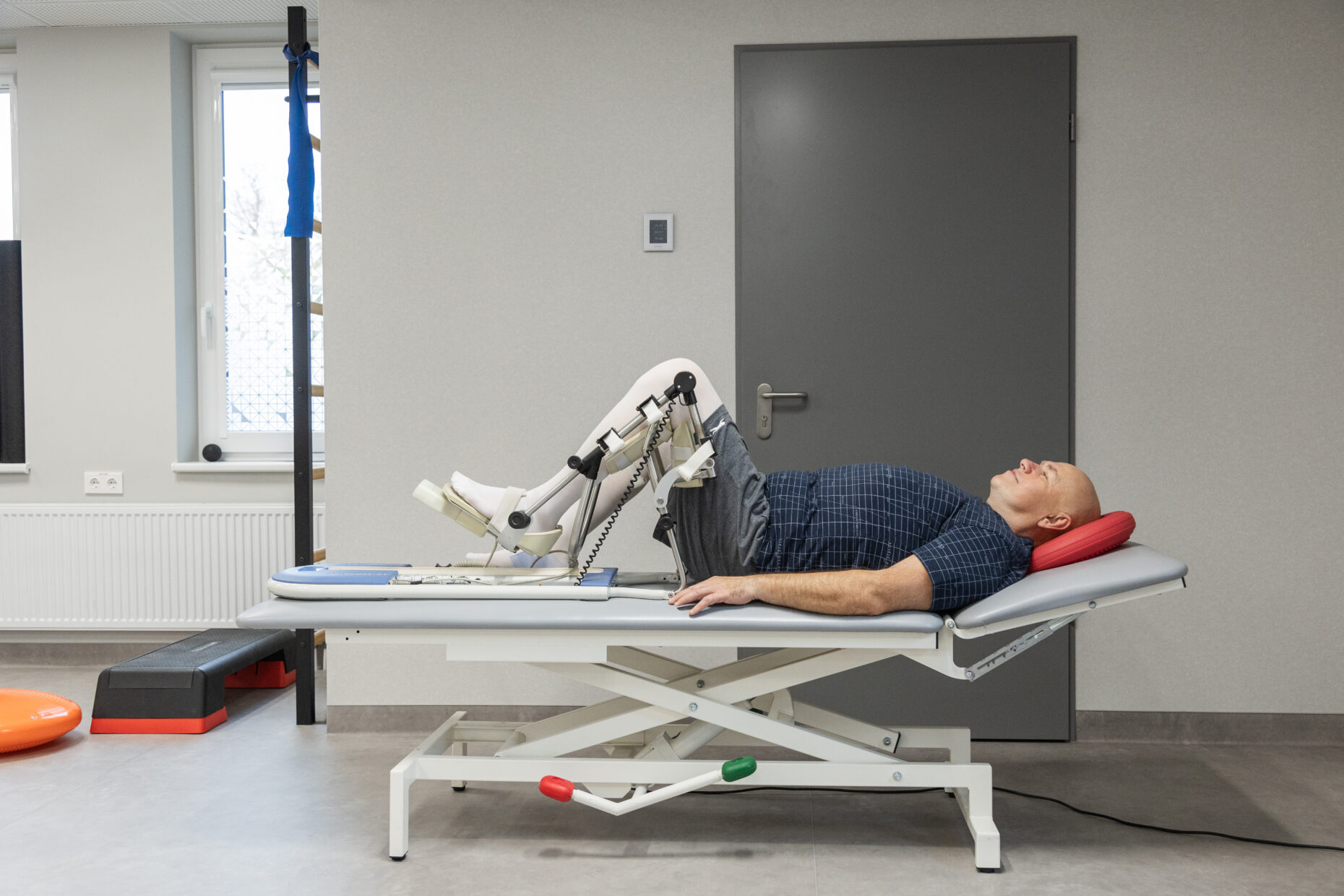
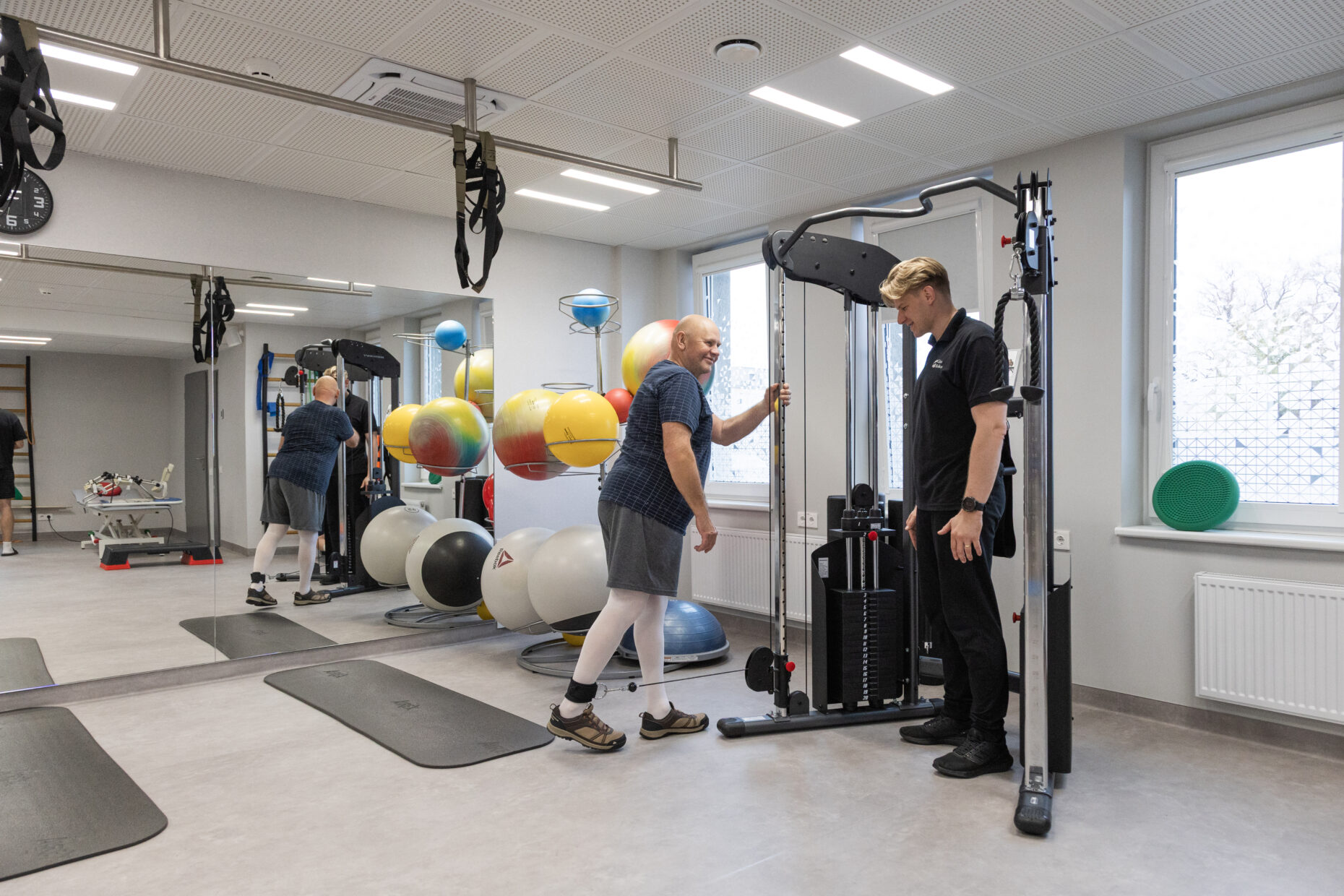
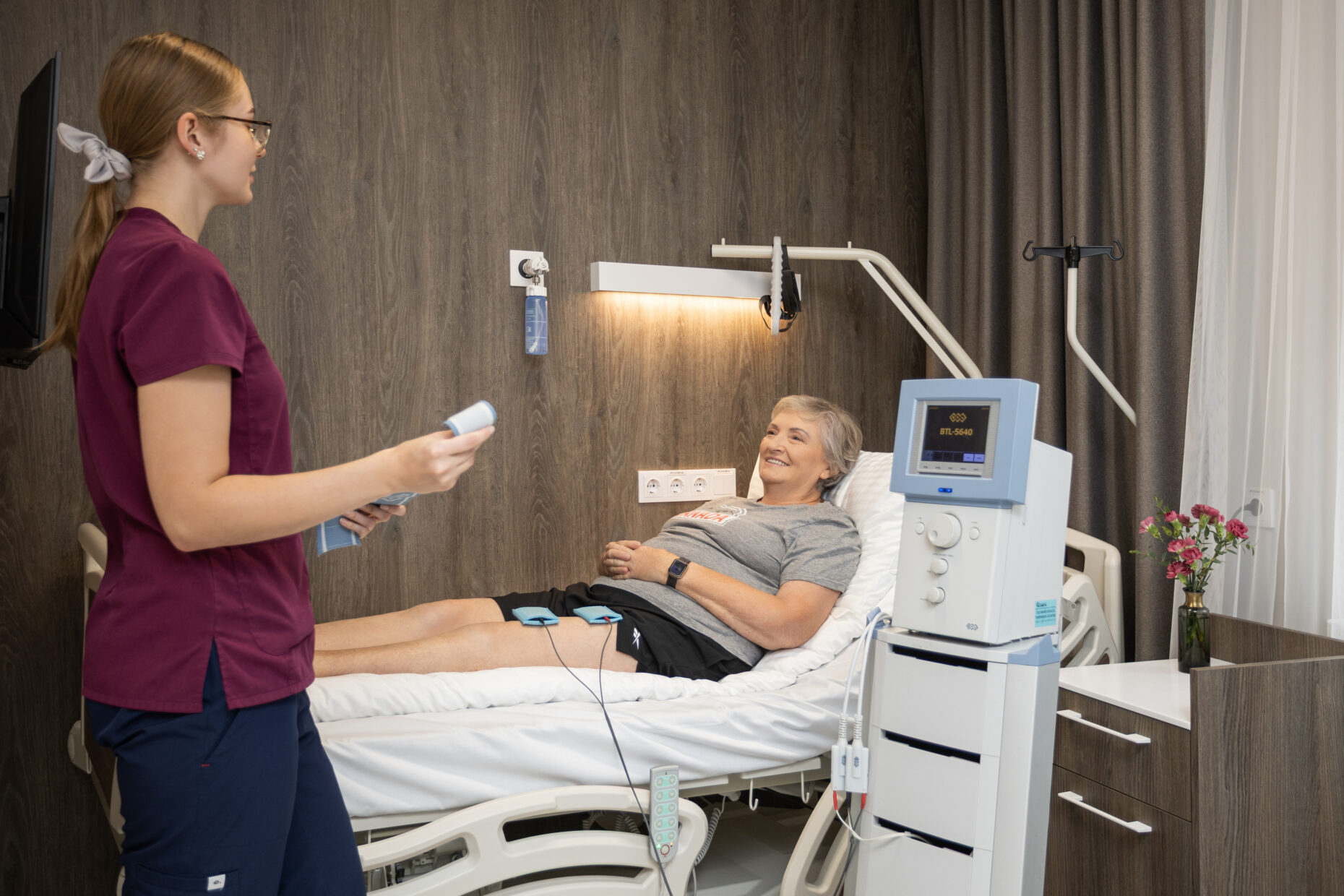
At Gijos Klinikos in Kaunas, you stay at the clinic for inpatient rehabilitation after surgery. The rehabilitation wing is on the same floor as the surgical ward, so there’s no transfer to another facility. You’ll have time to practise walking, work on everyday movements and ask questions while the team is there to help.
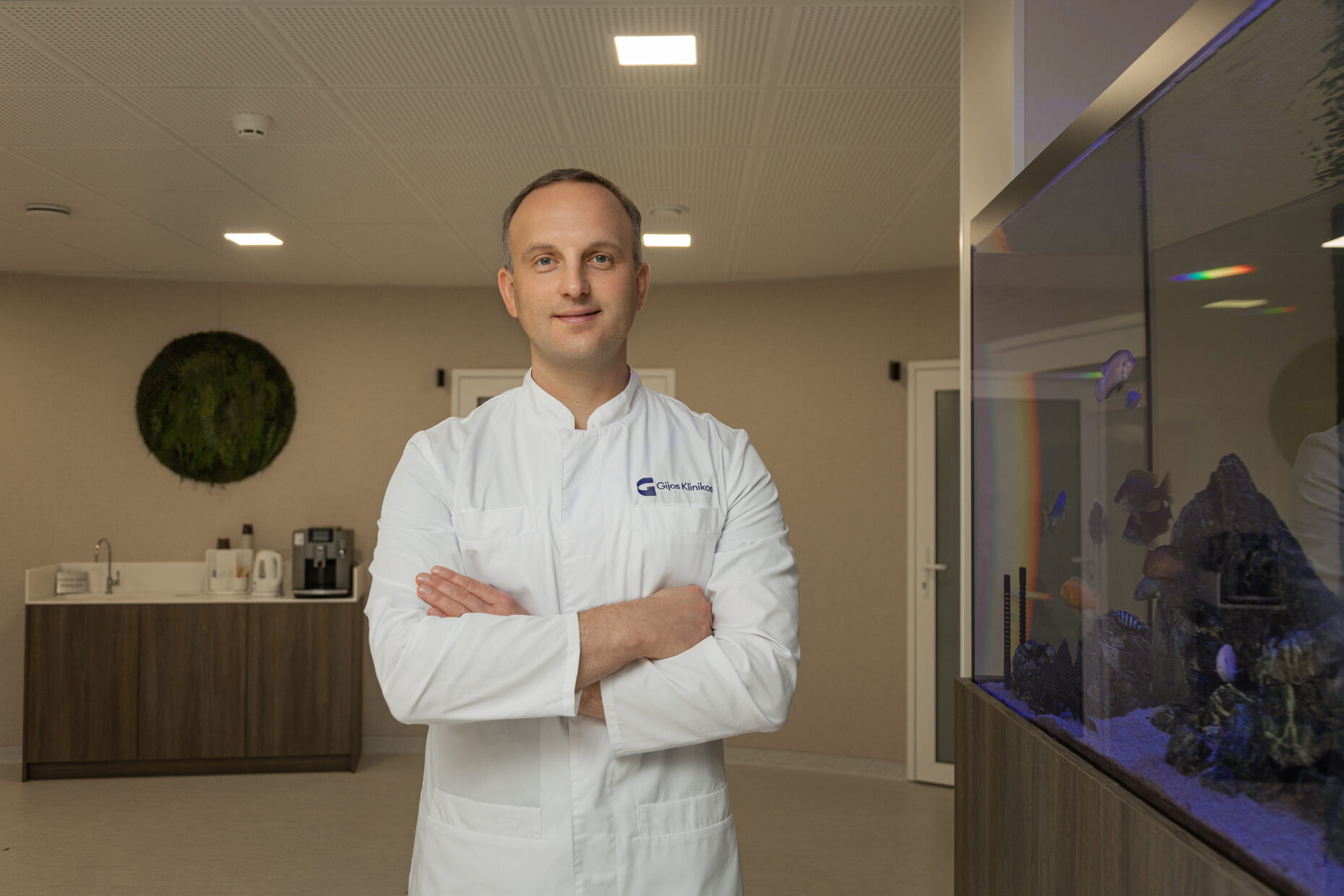
We asked our Lead Physiotherapist, Vainius Petrauskas, the questions we hear most often from international patients — about their first steps after surgery, what rehabilitation involves and how to continue once they’re back home.
How long will I spend in rehabilitation after surgery?
If you’re coming to us for a single knee or hip replacement, we recommend staying for at least 7 days, with your flight home on day 7. This gives you time to recover from surgery, get started with rehabilitation and feel more confident on your feet before heading home.
If you’re having both knees replaced at the same time, we recommend spending 10 days at the clinic after surgery. This gives you a little extra time for rehabilitation, allowing you to build strength and confidence before travelling home.

What will I be able to do by the end of my rehabilitation?
Our goal is to help you return home feeling confident with everyday activities. By the end of your stay, we aim for you to be able to:
- Walk safely with crutches, including longer distances.
- Go up and down stairs independently using the correct technique.
- Sit down, stand up and get in and out of bed safely.
- Walk with better posture, balance and a more natural walking pattern.
- Have improved muscle strength and joint mobility.
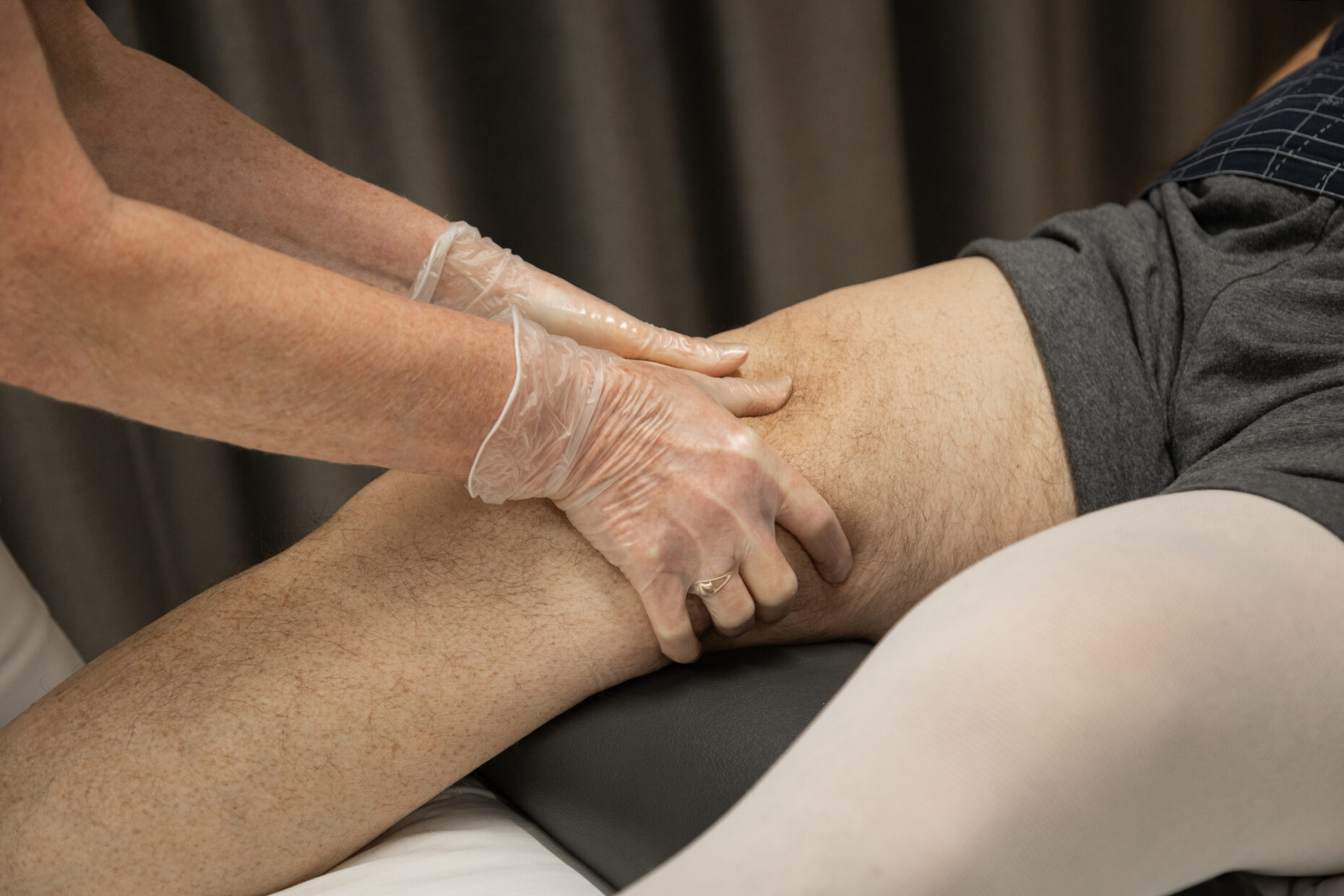
We’ll also work on relieving muscle tension, improving flexibility and addressing any muscle imbalances that may affect the way you walk.
Before you leave, your physiotherapist will show you exercises to continue at home, so you know exactly how to keep making progress after your stay.
What does the rehabilitation process look like day by day?
Day of surgery
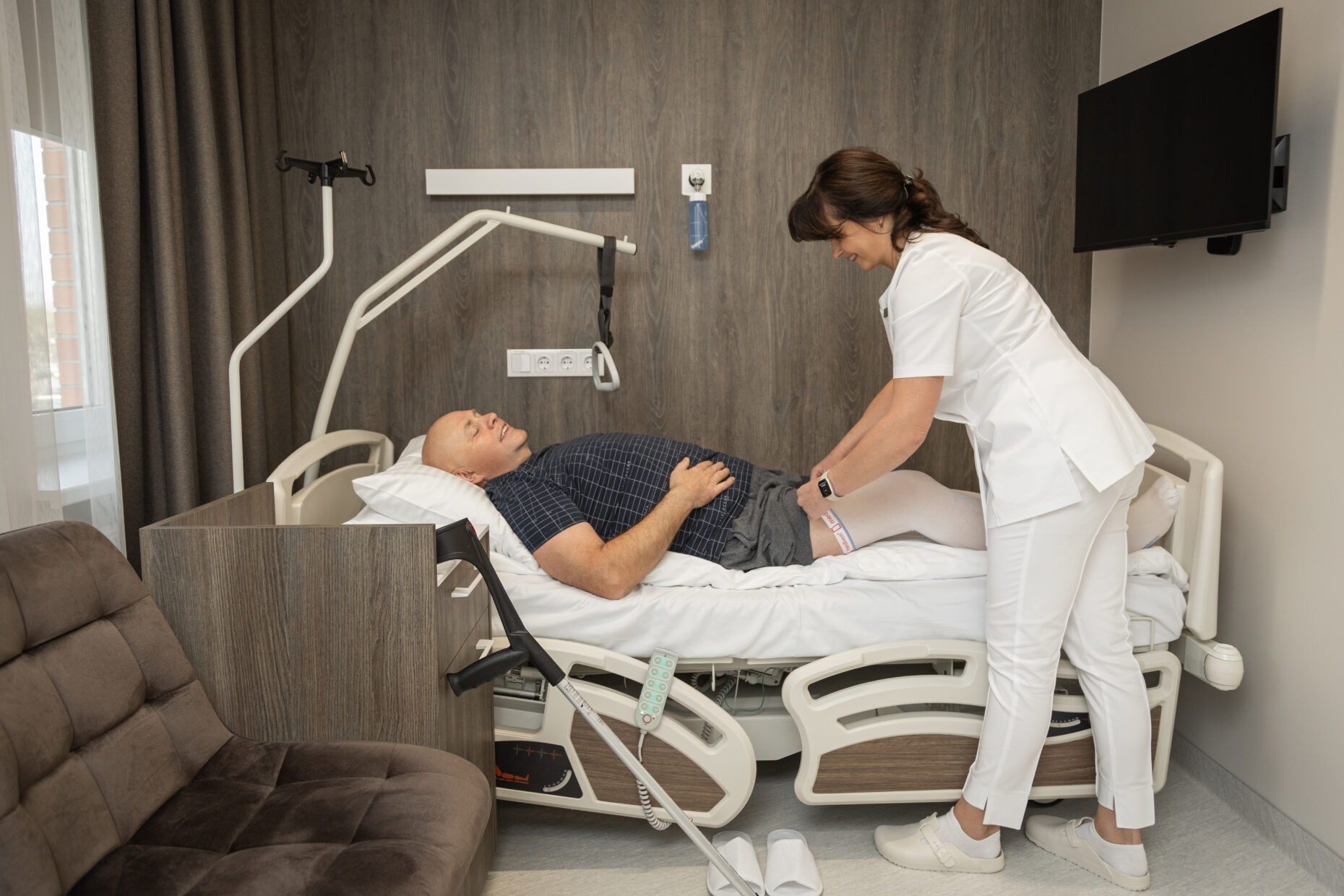
Once the anaesthesia has worn off and you have regained feeling in your legs, your physiotherapist will help you get out of bed and take your first steps. The goal for the evening is simple: to stand up safely and walk to the bathroom with assistance.
Day 1 after surgery
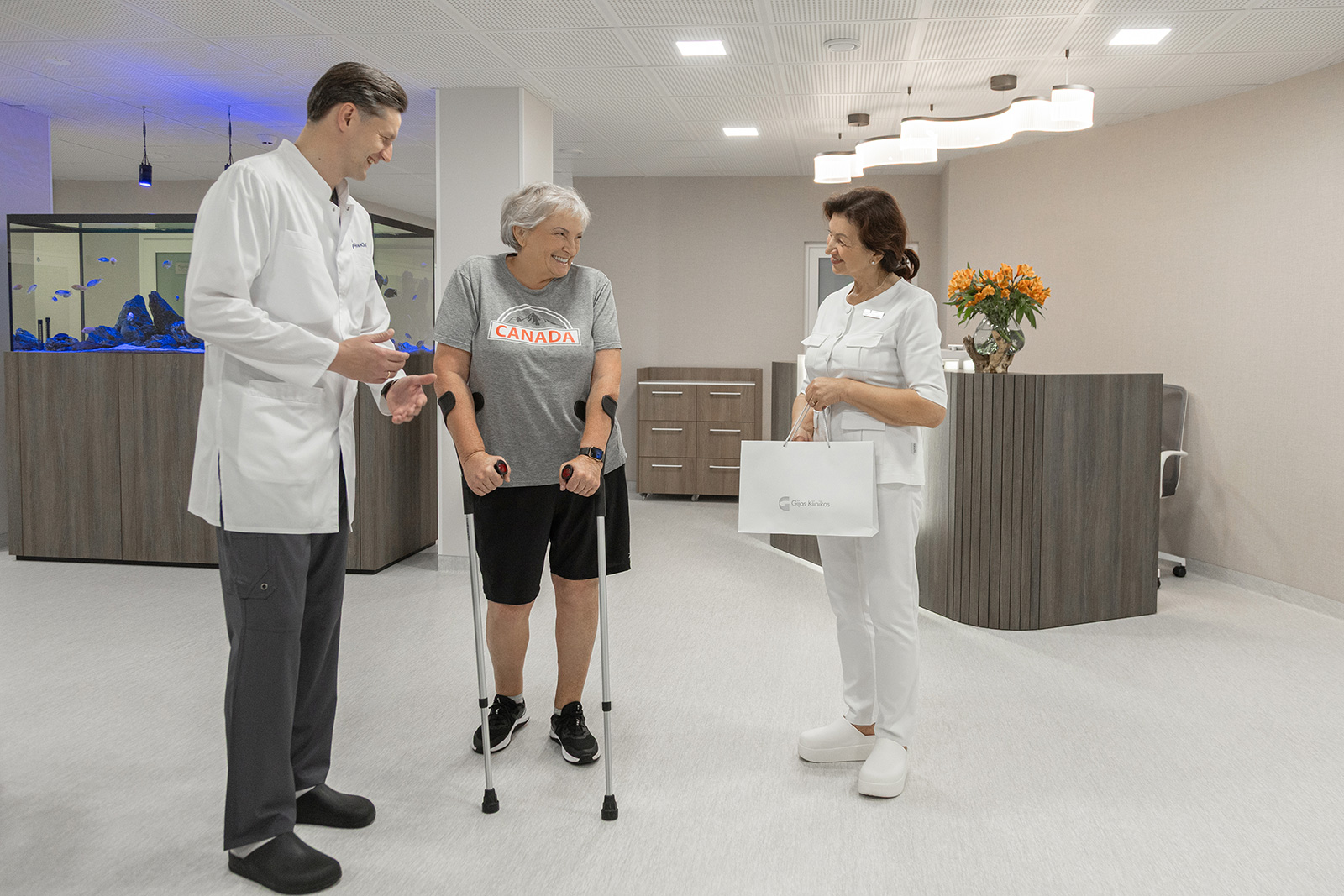
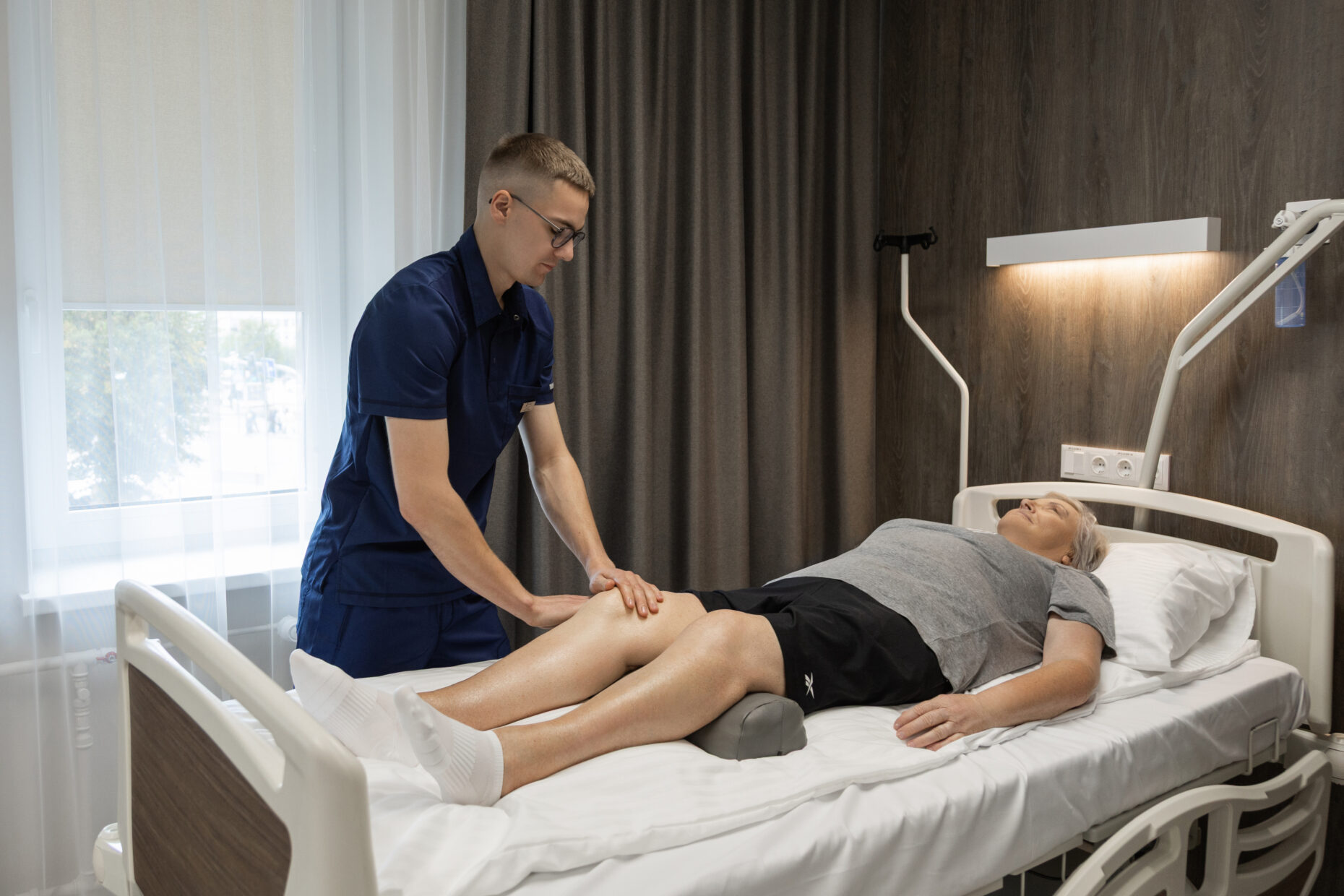
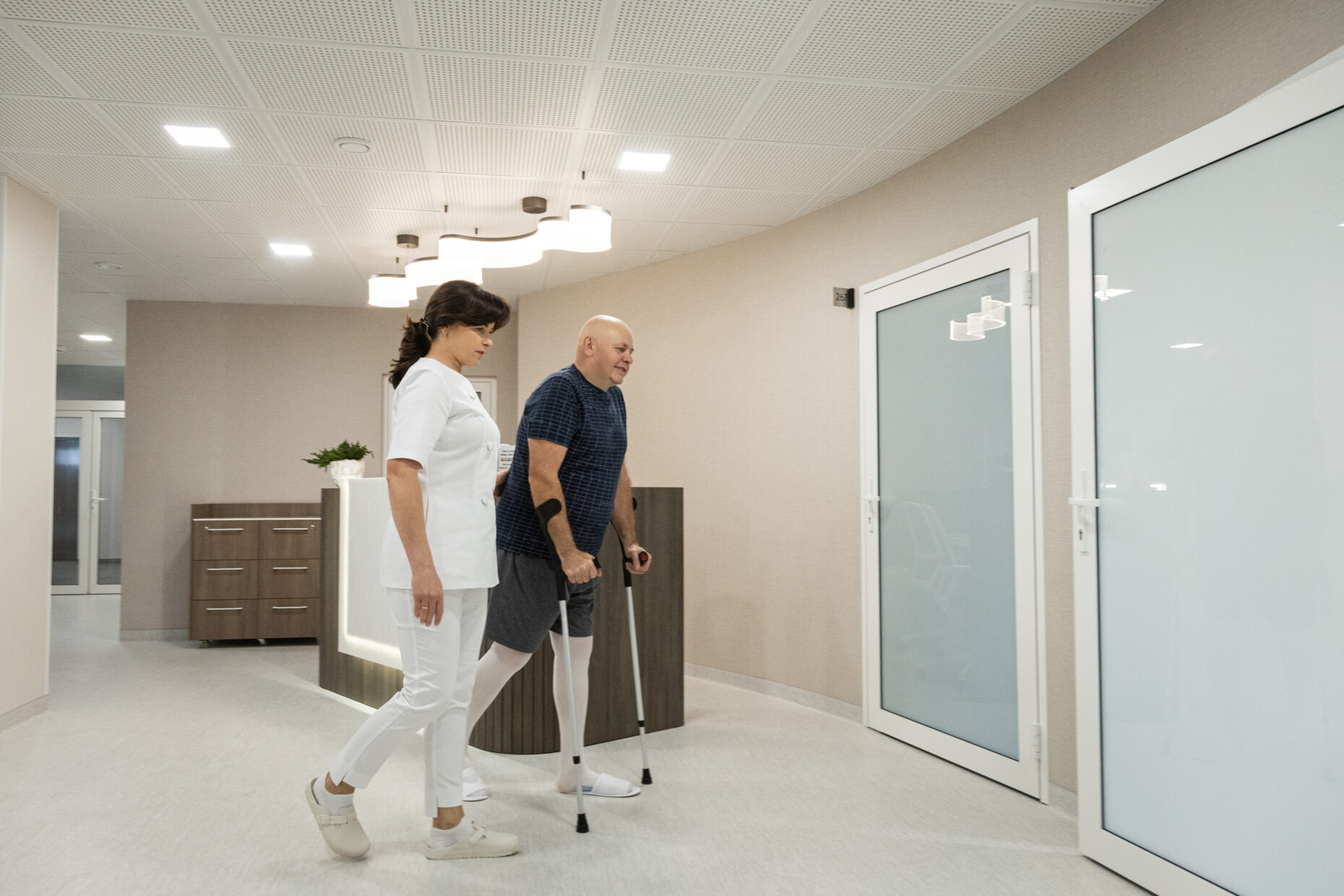
You’ll start walking in your room and later around the clinic with your physiotherapist, using a walking frame for support. The focus is on building confidence, improving your stability and getting used to moving with your new joint.
Days 2–3
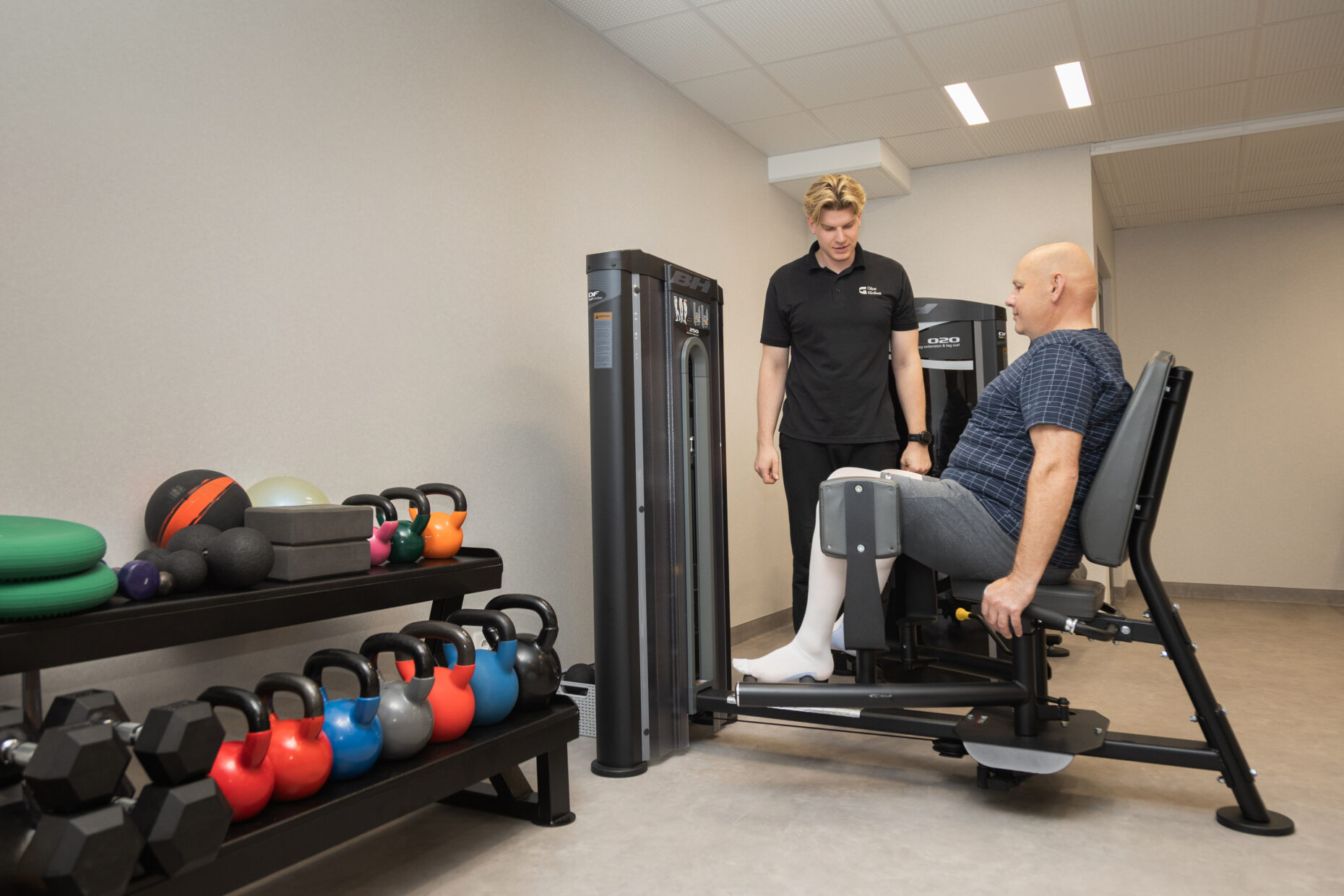
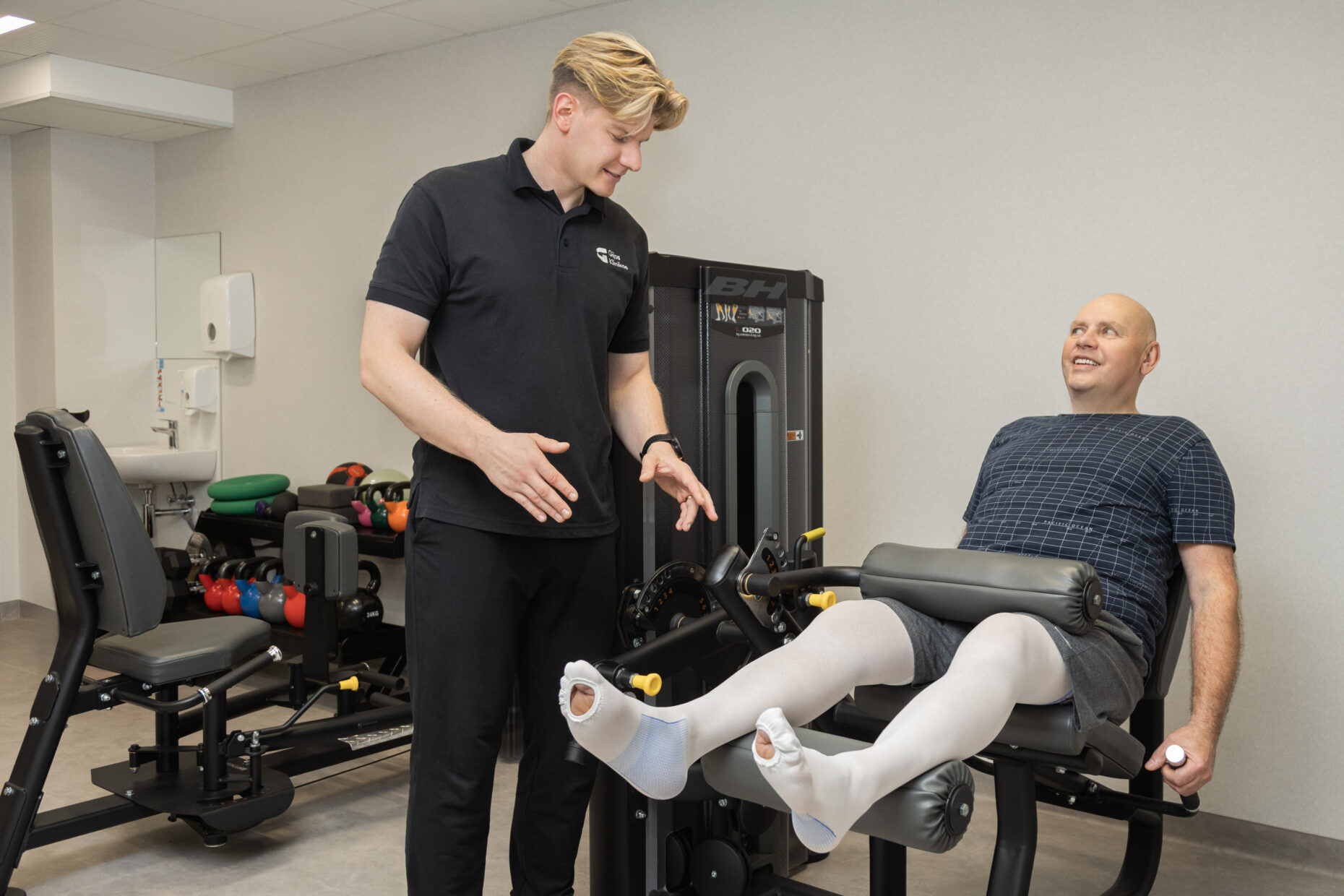
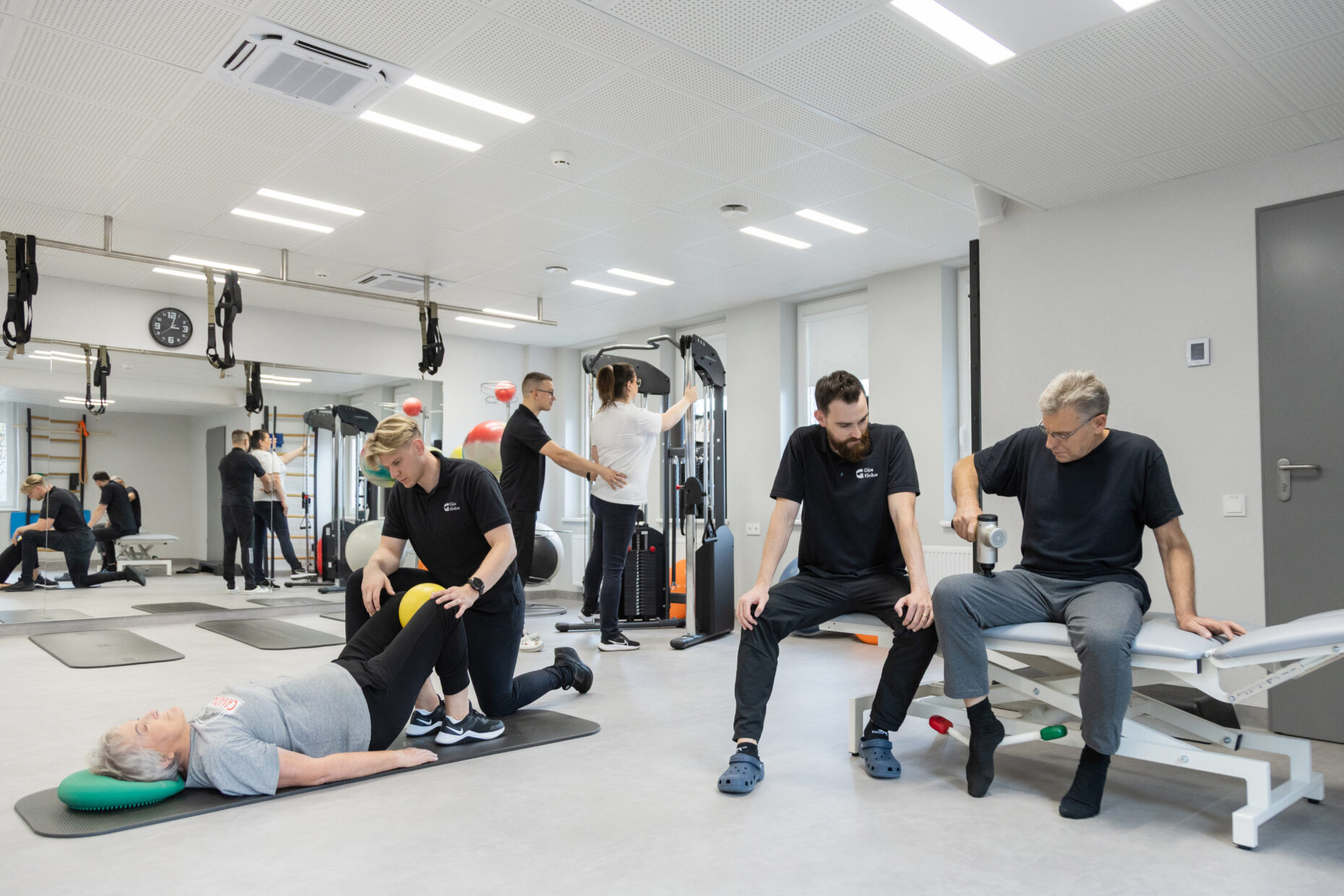
By the second or third day, most patients have learnt to use crutches and can make their own way to the rehabilitation gym. Your physiotherapy sessions will gradually become more active as your strength and mobility improve.
The following days
As you progress, your physiotherapist will help you practise everyday activities you’ll need when you return home. Depending on your individual abilities and recovery, these may include getting down onto the floor and back up, climbing stairs, getting in and out of a car, and moving safely in different situations.
We’ll also talk you through practical aspects of life after joint replacement, including when and how to safely resume sexual activity.
The pace of rehabilitation is always adapted to your recovery, so you can build confidence and independence one day at a time.
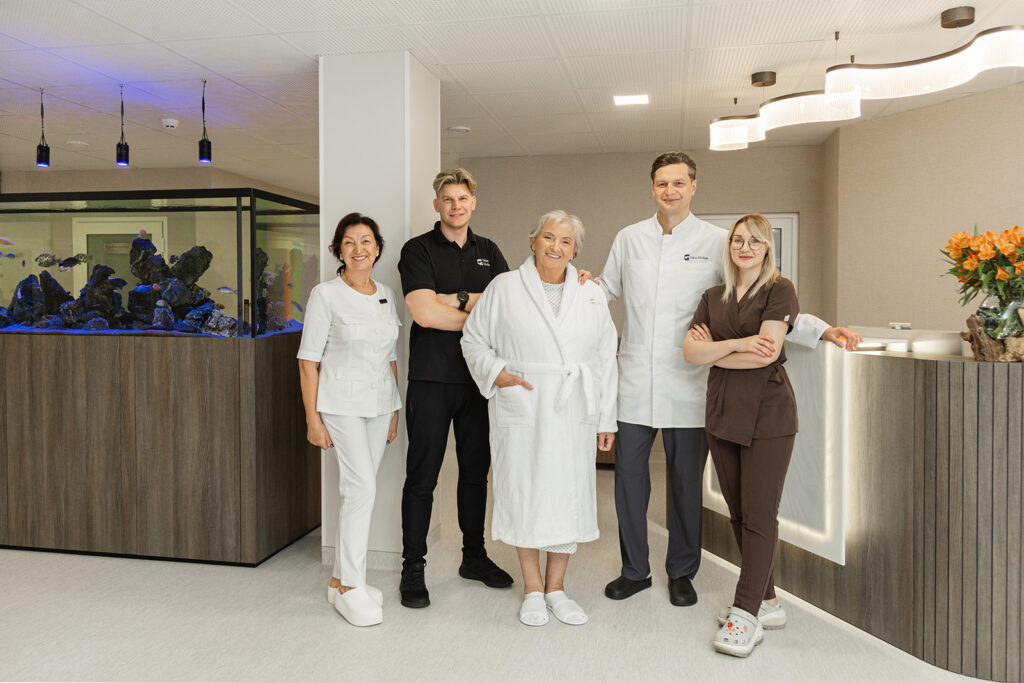
How does rehabilitation differ if I have both knees replaced at the same time?
Having both knees replaced at the same time is more common than you might think. Some patients choose this option because it means just one anaesthetic, one recovery period and a more cost-effective treatment overall. However, it is not suitable for everyone. Your surgeon will assess your suitability, taking into account your overall health, medical history and a range of other clinical factors. Recovery can be particularly painful and physically demanding, especially in the early stages, so it is important to understand what to expect before making your decision.
The rehabilitation programme is largely the same as for a single knee replacement, but we take things a little more slowly to give your body extra time to recover.
For this reason, we recommend staying at the clinic for at least 10 days after surgery. This gives you more time to regain strength, improve your mobility and feel confident on your feet before travelling home.
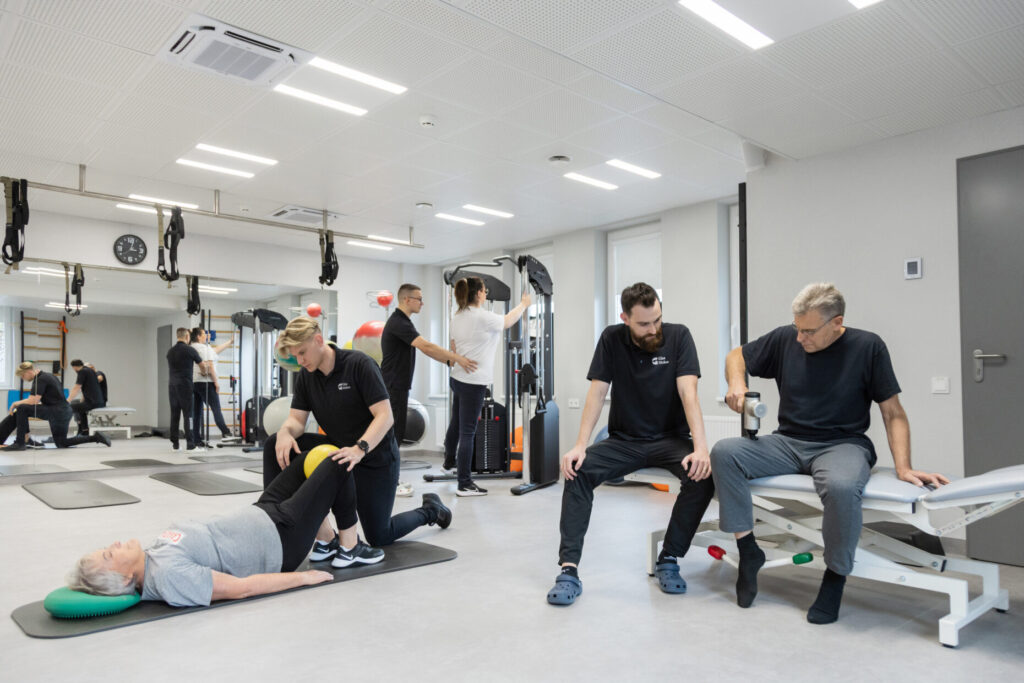
Will I have individual physiotherapy sessions every time?
During the week, we have a larger team of physiotherapists on duty, so each physiotherapist typically works with just one or two patients at a time in the rehabilitation gym.
At weekends, sessions are held in small groups of up to three patients per physiotherapist.
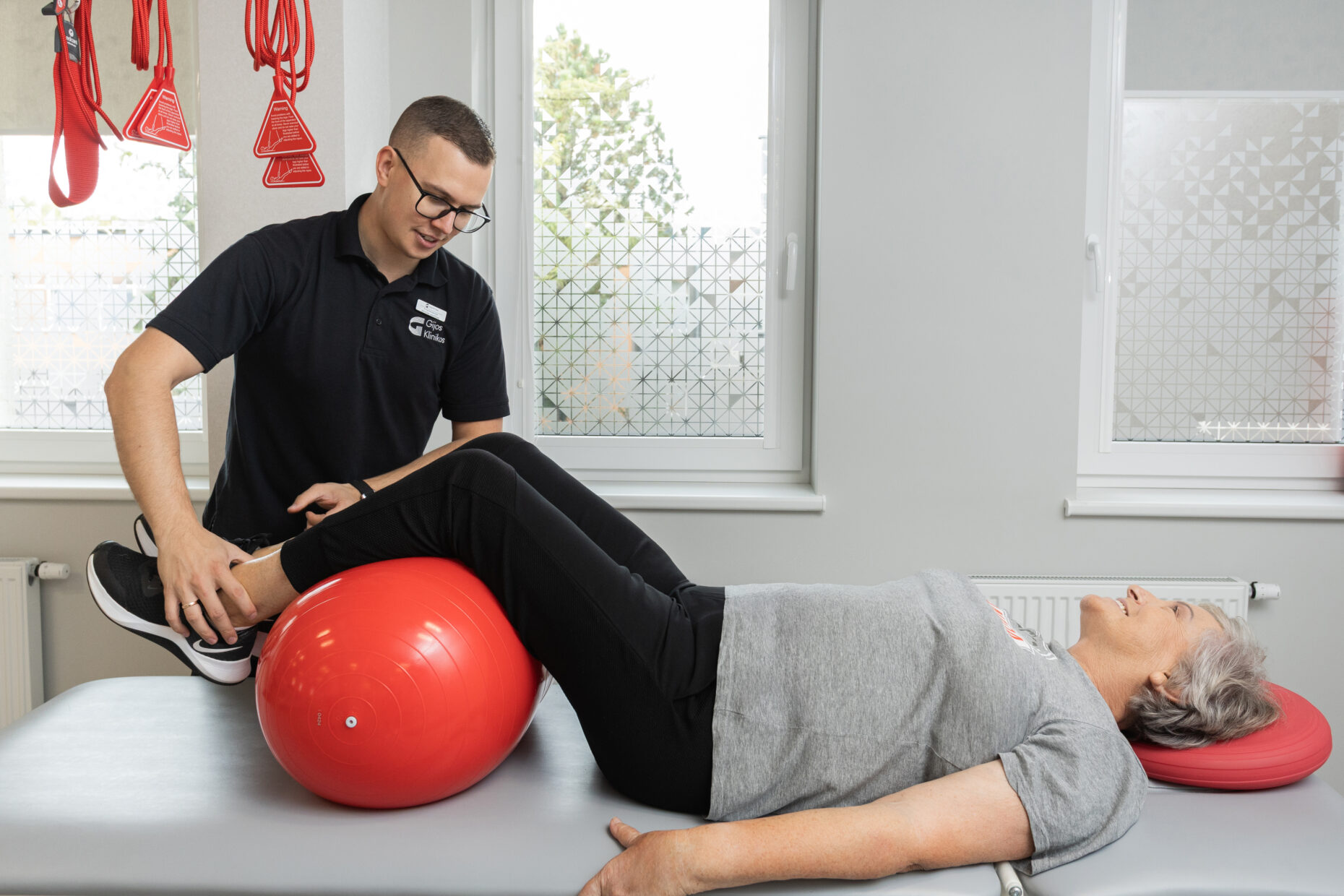
But don’t worry – even when you’re sharing a session, your rehabilitation is always tailored to you. Your physiotherapist will guide you through exercises suited to your needs and progress, making sure you receive the attention and support you need every step of the way.
Will physiotherapy be too physically demanding if I’m older and haven’t exercised in years?
Physiotherapy is certainly quite intensive, as there’s a lot we want to help you achieve during your stay. Since most of our international patients are only with us for a relatively short time, we make the most of every session to help you regain strength, mobility and independence before heading home.
That said, you don’t need to be fit or used to exercising to manage rehabilitation. Your programme is tailored to your age, physical abilities and progress, and your physiotherapist will make sure you’re working at a pace that’s both safe and effective.
One thing that can make a real difference is starting to exercise well before your surgery. Even gentle, regular exercises to strengthen your muscles and improve your mobility can help you feel better prepared for rehabilitation and make those first few days of recovery a little easier.
We’ve helped patients of all ages and body types through their recovery. Our youngest joint replacement patient was just over 30, while our oldest was over 90 – and successfully completed both surgery and physiotherapy.
So yes, rehabilitation takes effort, but you certainly don’t need to be an athlete to get through it!
What exercises should I do before joint replacement surgery?
I’ve actually put together a few videos specifically to help you prepare for your surgery. You can follow along at home and start building your strength and mobility before your operation:
What exercises should I do at home after returning from the clinic?
Before you head home, we’ll give you a take-home pack with all your medical documents, the medication you’ll need and an illustrated exercise booklet I’ve personally put together to help you continue your rehabilitation at home.
The booklet includes clear instructions and illustrations, so you’ll know which exercises to do and how to keep building your strength and mobility.
You’ll also find plenty of helpful exercise videos and similar content on our YouTube channel:
Gallery: